
How to Write a Rent Increase Notice ? (With Free printable Templates)
As a landlord or property manager, drafting a rent increase notice is an essential part of managing rental properties. However, it’s a task that requires careful consideration to maintain positive tenant relationships while ensuring compliance with state and local laws. This SEO-optimized guide provides everything you need to know about creating a professional and legally compliant rent increase notice, including free templates, state-specific requirements (e.g., California, Florida, Oregon), and answers to frequently asked questions. Whether you’re looking for a rent increase notice template, a free printable rent increase notice, or guidance on specific regulations like the 30-day rent increase notice in California, this word article has you covered.
What is a Rent Increase Notice?
A rent increase notice is a formal letter from a landlord to a tenant informing them of an upcoming increase in their rent payment. This document is typically used for month-to-month tenancies or when a fixed-term lease is up for renewal. The notice serves as an official communication, ensuring transparency and giving tenants time to adjust their budgets, negotiate, or decide whether to continue renting the property. A well-crafted notice is clear, professional, and compliant with local laws, helping to avoid disputes and maintain a positive landlord-tenant relationship.
Why is a Rent Increase Notice Important?
- Legal Compliance: Most states require landlords to provide written notice within a specific timeframe before increasing rent. Failure to comply can render the increase invalid or lead to legal disputes.
- Transparency: A clear notice informs tenants of the new rent amount, effective date, and reasons for the increase, fostering trust.
- Documentation: A written notice serves as proof that the tenant was informed, protecting the landlord in case of disputes.
- Tenant Options: It gives tenants time to accept the new rent, negotiate, or plan to vacate the property if the increase is unaffordable.
Key Components of a Rent Increase Notice
To create an effective and legally compliant rent increase notice, include the following elements:
- Date of the Notice: The date the letter is written or sent, serving as an official timestamp.
- Tenant’s Name and Address: The full name of the tenant(s) and the rental property address, including unit number if applicable.
- Current Rent Amount: Clearly state the current monthly rent to provide context.
- New Rent Amount: Specify the updated rent amount and the percentage increase.
- Effective Date: Indicate when the new rent will take effect, ensuring compliance with state notice periods.
- Reason for Increase (Optional): Briefly explain the reason for the increase (e.g., rising property taxes, market rates, or maintenance costs) to promote transparency.
- Delivery Method and Proof: Note how the notice was delivered (e.g., certified mail, in-person) and retain proof of delivery.
- Landlord’s Contact Information: Include your name, signature, and contact details for tenant inquiries.
- State-Specific Requirements: Ensure the notice complies with local laws, such as California’s Tenant Protection Act or Florida’s notice period regulations.
How to Write a Rent Increase Notice: Step-by-Step Guide
Follow these steps to craft a professional and friendly rent increase notice that complies with legal requirements and maintains tenant goodwill.
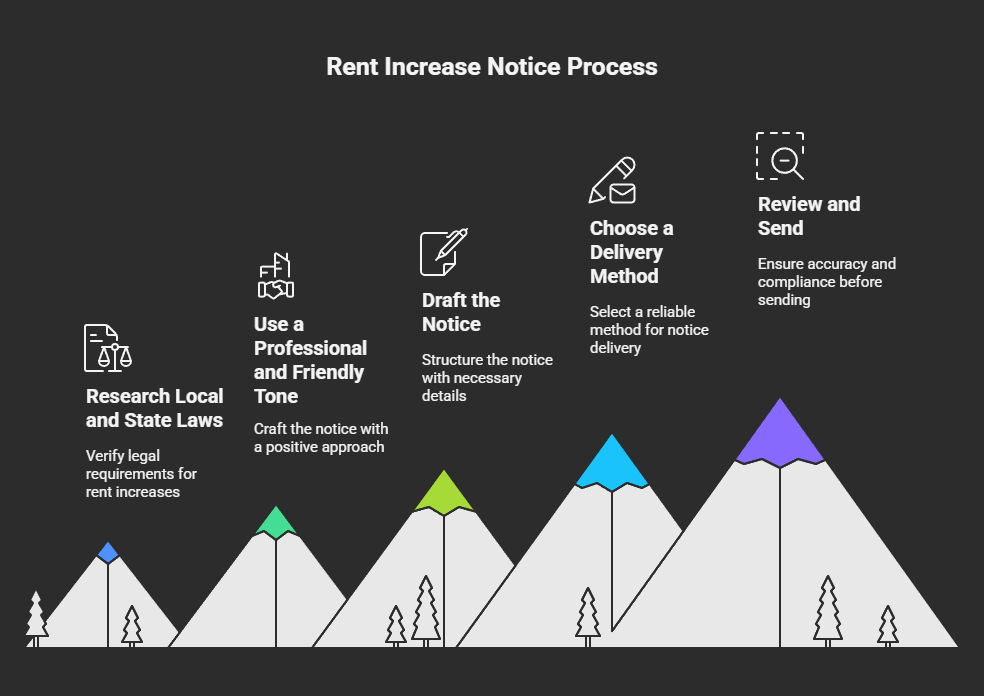
Step 1: Research Local and State Laws
Before drafting the notice, verify the legal requirements in your state or city. Key considerations include:
- Notice Period: Most states require 30 to 90 days’ notice for rent increases, depending on the lease type and increase percentage.
- Rent Control Laws: In states like California and Oregon, rent control laws may cap the allowable increase.
- Delivery Methods: Some states mandate specific delivery methods, such as certified mail or in-person delivery.
For example:
- California: Under the Tenant Protection Act (AB 1482), landlords must provide 30 days’ notice for increases of 10% or less and 90 days for increases exceeding 10%.
- Florida: No state-mandated notice period exists, but local ordinances or lease agreements may specify requirements.
- Oregon: Landlords must provide 90 days’ notice for rent increases, with a cap of 7% plus inflation annually.
Step 2: Use a Professional and Friendly Tone
A friendly yet professional tone can reduce tenant frustration. Avoid overly formal or threatening language, and consider explaining the reason for the increase (e.g., rising property costs or market rates) to show transparency.
Step 3: Draft the Notice
Use the following structure to create a clear and comprehensive rent increase notice:
- Header: Include “Notice of Rent Increase” at the top, along with the date.
- Greeting: Address the tenant by name (e.g., “Dear [Tenant’s Name]”).
- Body: State the current rent, the new rent, the percentage increase, and the effective date. Mention compliance with state laws and provide a brief reason for the increase.
- Closing: Include a call-to-action (e.g., contact the landlord with questions) and your signature.
Step 4: Choose a Delivery Method
Common delivery methods include:
- Certified Mail: Preferred for proof of receipt.
- In-Person Delivery: Ensures the tenant receives the notice but may create tension.
- Email: Allowed in some states if the lease permits, though it’s less reliable for proof of delivery.
Always retain proof of delivery, such as a certified mail receipt or signed acknowledgment.
Step 5: Review and Send
Before sending, review the notice for clarity, accuracy, and compliance with local laws. Consider having an attorney review it to ensure it meets all legal requirements. Send the notice well in advance of the required notice period to account for delivery time.
Free Rent Increase Notice Template
Below is a customizable rent increase notice template that you can download in PDF or Word format. This template is designed to be professional, friendly, and compliant with general legal standards. Always tailor it to your state’s specific requirements.
State-Specific Rent Increase Notice Requirements
California Rent Increase Notice
In California, the Tenant Protection Act of 2019 (AB 1482) governs rent increases for most residential properties. Key requirements include:
- Notice Period:
- 30 days for increases of 10% or less (35 days if mailed).
- 90 days for increases exceeding 10% (95 days if mailed).
- 60 days for rent-controlled units.
- Maximum Increase: Limited to 5% plus the Consumer Price Index (CPI) or 10%, whichever is lower, in a 12-month period.
- Delivery: Must be in writing and delivered via certified mail, in-person, or as permitted by the lease agreement.
California Rent Increase Notice Template (PDF): Use the general template above, but ensure it includes the specific notice period and a reference to AB 1482 compliance. For example:
“This notice complies with the California Tenant Protection Act (AB 1482), providing [30/90] days’ notice for a rent increase of [Percentage]%.”
Florida Rent Increase Notice
Florida does not have statewide rent control laws, giving landlords more flexibility. However:
- Notice Period: Typically governed by the lease agreement or local ordinances. Most landlords provide 30–60 days’ notice for month-to-month leases.
- Delivery: Written notice via certified mail or in-person delivery is recommended for documentation.
- No Maximum Increase: Landlords can raise rent as much as they wish, provided it’s not discriminatory or retaliatory.
Florida Rent Increase Notice Template: Use the general template, but specify that the notice complies with the lease agreement and local ordinances. For example:
“This notice is provided in accordance with the terms of your lease agreement and applicable Florida law.”
Oregon Rent Increase Notice
Oregon has stringent rent control laws under the state’s rent control legislation:
- Notice Period: 90 days’ written notice is required for all rent increases.
- Maximum Increase: Capped at 7% plus the annual inflation rate.
- Delivery: Written notice via certified mail or in-person delivery is recommended.
Oregon Rent Increase Notice Template: Modify the general template to include:
“This notice complies with Oregon’s rent control laws, providing 90 days’ notice for a rent increase not exceeding 7% plus the annual inflation rate.”
Tips for Writing a Friendly Rent Increase Letter
- Be Transparent: Explain the reason for the increase, such as rising property taxes or market rates, to build trust.
- Keep It Professional: Use a polite and formal tone, avoiding aggressive language.
- Offer Flexibility: If possible, allow tenants to discuss the increase or propose a phased implementation.
- Highlight Property Value: Mention recent improvements (e.g., renovations) that justify the increase.
- Provide Ample Notice: Exceed the minimum notice period to give tenants more time to adjust.
Common Challenges and How to Address Them
- Tenant Resistance: Some tenants may resist or negotiate. Be open to discussions but remain firm if the increase is reasonable and legal.
- Legal Compliance: Always consult local laws or an attorney to ensure compliance, especially in rent-controlled areas like California or Oregon.
- Documentation: Retain copies of the notice and proof of delivery to protect against disputes.
- Market Research: Ensure the new rent aligns with local market rates to avoid pricing out tenants.
Additional Considerations for Landlords
Understanding Market Trends
Before implementing a rent increase, research local market trends to ensure the new rent is competitive. Websites like Zillow, Rent.com, or local real estate boards can provide insights into average rental prices in your area. Setting a rent that’s too high may lead to tenant turnover, while a modest increase aligned with market rates can maintain occupancy and profitability.
Communicating with Tenants
Open communication is key to maintaining a good landlord-tenant relationship. Consider scheduling a meeting or phone call with tenants to discuss the increase before sending the formal notice. This approach can help address concerns and reduce the likelihood of disputes.
Handling Tenant Turnover
If a tenant decides to vacate due to the rent increase, be prepared for the costs of tenant turnover, such as advertising the property, screening new tenants, and potential vacancy periods. Weigh these costs against the benefits of the rent increase to ensure it’s financially viable.
Best Practices for Long-Term Success
- Regular Maintenance: Keep the property in good condition to justify rent increases. Tenants are more likely to accept increases if they see value in the property.
- Annual Reviews: Review rent annually to make small, incremental increases rather than large, sudden jumps that may shock tenants.
- Document Everything: Keep detailed records of all communications, notices, and lease agreements to protect yourself in case of legal disputes.
- Stay Informed: Laws around rent increases change frequently, especially in rent-controlled areas. Subscribe to local landlord associations or legal updates to stay compliant.
Resources for Landlords
For additional support, explore these resources:
- National Apartment Association (NAA): Offers guides and templates for landlords.
- Local Housing Authorities: Provide state-specific regulations and resources.
- Legal Services: Platforms like Rocket Lawyer or LegalZoom offer customizable legal documents and attorney consultations.
- Tenant-Landlord Forums: Online communities on platforms like Reddit or BiggerPockets can provide practical advice from experienced landlords.
Conclusions:
Drafting a rent increase notice is a critical responsibility for landlords, but it can be done effectively with careful planning and adherence to legal requirements. By researching state-specific regulations, using a professional yet friendly tone, and providing clear, transparent information, you can implement rent increases while fostering positive tenant relationships. The free templates provided above, customizable for states like California, Florida, and Oregon, streamline the process and ensure compliance. Whether you’re navigating rent control laws or aiming to maintain tenant goodwill, this guide equips you with the tools and knowledge to succeed.
For additional resources, consider:
- eForms (eforms.com) for free printable templates.
- Zillow Rental Manager (zillow.com) for landlord tools and templates.
- LawDistrict (lawdistrict.com) for customizable notice forms.
If you have specific questions or need legal advice, consult a local attorney to ensure your notice meets all state and local requirements.
FAQs About Rent Increase Notices
1. How Much Notice is Required for a Rent Increase?
The notice period varies by state and lease type:
- California: 30 days (10% or less), 90 days (over 10%), or 60 days (rent-controlled units).
- Florida: Typically 30–60 days, depending on the lease agreement.
- Oregon: 90 days for all increases.
- General Rule: Most states require 30–60 days for month-to-month leases and at lease renewal for fixed-term leases.
2. Can a Landlord Increase Rent During a Lease Term?
Generally, rent cannot be increased during a fixed-term lease unless the lease agreement explicitly allows it. For month-to-month leases, landlords can increase rent with proper notice, typically 30–90 days, depending on state law.
3. What Happens if a Tenant Rejects a Rent Increase?
If a tenant rejects the increase:
- Month-to-Month Lease: The landlord may issue a lease termination notice if the increase complies with state law.
- Fixed-Term Lease: The tenant can continue paying the current rent until the lease expires, then decide whether to renew at the new rate or vacate.
4. Can a Rent Increase Affect the Security Deposit?
In some states, if the security deposit is tied to the monthly rent (e.g., twice the monthly rent), an increase in rent may require an additional deposit. However, this depends on state law and the lease agreement. Check local regulations before requesting an additional deposit.
5. How Can Tenants Respond to a Rent Increase Notice?
Tenants can:
- Accept the Increase: Sign a new lease or amendment agreeing to the new rent.
- Negotiate: Discuss financial hardships or request a smaller increase.
- Vacate: If the increase is unaffordable, provide notice to vacate per the lease terms.
- Seek Legal Advice: If the increase seems unlawful (e.g., exceeds rent control caps or is discriminatory), consult a tenant attorney.
6. What Makes a Rent Increase Illegal?
A rent increase may be illegal if:
- It violates rent control laws (e.g., exceeding California’s 10% cap).
- It’s issued mid-lease without a clause allowing it.
- It’s discriminatory or retaliatory (e.g., targeting a tenant for reporting maintenance issues).
- Proper notice wasn’t provided (e.g., less than 30 days in California for a 10% or less increase).
7. How Should a Landlord Deliver a Rent Increase Notice?
Preferred methods include:
- Certified Mail: Provides proof of receipt.
- In-Person Delivery: Confirms receipt but may be confrontational.
- Email: Allowed in some states if the lease permits, but less reliable. Always check state laws and lease terms for permitted delivery methods.