
Ohio Squatter Rights: Complete Guide to Laws, Eviction, and Protections in 2025
If you’re a property owner in Ohio dealing with an unexpected occupant, or simply curious about real estate laws, understanding Ohio squatter rights is essential. In 2025, these laws continue to spark debate, balancing property ownership protections with historical concepts like adverse possession. This comprehensive guide dives deep into what squatters are, how Ohio squatter laws work, the eviction process, and practical advice on how to handle such situations. We’ll also explore related topics like squatter settlements, the differences between squatters and other unauthorized occupants, and answer common questions to help you navigate this complex area of property law.
Whether you’re asking “what is a squatter,” searching for “how to get a squatter out of your house,” or wondering about “how to evict a squatter” in Ohio, this article covers it all. By the end, you’ll have a clear, actionable understanding of your rights and responsibilities under current Ohio statutes.
What Is a Squatter? A Clear Definition and Overview
At its core, a squatter is someone who occupies a property without the owner’s permission or legal right to do so. Unlike renters or guests, squatters enter and stay on abandoned, unoccupied, or foreclosed properties, often with the intent to live there long-term. This isn’t just a random act—squatters might repair the property, pay utilities, or even treat it as their own home.
In legal terms, squatting ties into the doctrine of adverse possession, where prolonged occupation can potentially lead to ownership claims. However, not every unauthorized occupant is a squatter. It’s crucial to distinguish them from similar but distinct categories:
- Holdover Tenant: This is a former renter who stays after their lease expires without renewing or getting permission. They might have some legal protections if the landlord accepts rent post-expiration, turning it into a month-to-month tenancy.
- Trespasser: A trespasser enters property illegally without any claim or intent to stay long-term. They have zero legal rights, and owners can involve law enforcement for immediate removal.
- Squatter: Squatters differ by occupying openly and continuously, sometimes aiming for adverse possession. They don’t start with rights but could gain them over time.
Squatting isn’t new—it’s rooted in historical land use laws designed to prevent unused properties from falling into disrepair. In modern Ohio, squatters often target vacant homes in urban areas like Cleveland or Cincinnati, where foreclosures from economic shifts leave properties empty.
But squatting isn’t always about individuals; it can scale up to entire communities, leading to what are known as squatter settlements.
Understanding Squatter Settlements: From Informal Communities to Legal Challenges
Squatter settlements, also called informal settlements or shantytowns, refer to groups of people building homes on land they don’t own, often without permits or infrastructure. These are common in developing countries but appear in the U.S., including Ohio, in areas hit by housing shortages or economic downturns.
In Ohio, squatter settlements might form on abandoned industrial land or rural plots. For instance, during the 2008 housing crisis, similar setups emerged in cities like Toledo. In 2025, with ongoing affordability issues, these settlements highlight broader social problems like homelessness and urban decay.
Legally, squatter settlements complicate things because multiple people claim possession. Adverse possession applies individually, but collective occupation can lead to zoning disputes or public health concerns. Property owners facing such settlements must address not just eviction but potential environmental cleanup.
If you’re dealing with a squatter settlement on your land, it’s not as simple as calling the police. Ohio law requires treating it like any unauthorized occupation, but scale adds layers—consult local authorities for health and safety violations to expedite removal.
Transitioning back to individual cases, let’s focus on Ohio squatter rights and how they play out under state law.
Ohio Squatter Laws: Adverse Possession and Key Rights in 2025
Ohio squatter rights are primarily governed by adverse possession statutes, which allow someone to claim ownership after occupying a property under specific conditions for a set period. As of 2025, Ohio maintains one of the longer timelines in the U.S.: a minimum of 21 years of continuous occupation.
This law isn’t designed to encourage squatting but to resolve disputes over neglected properties. Here’s a breakdown of the key elements required for a successful adverse possession claim in Ohio:
- Continuous Possession: The squatter must live on the property without significant interruptions for the full 21 years. Vacating for months could reset the clock.
- Open and Notorious Possession: Occupation must be visible—think mowing the lawn, fixing fences, or paying utilities. It can’t be hidden; the owner should reasonably notice.
- Exclusive Possession: The squatter can’t share the property with the owner or others claiming rights. It’s all or nothing.
- Hostile Possession: This doesn’t mean aggressive behavior; it simply means without the owner’s permission and against their interests.
Ohio Revised Code Section 2305.04 outlines these rules, and courts interpret them strictly. In 2025, no major changes have altered the 21-year period, though some legislators have proposed shortening it amid rising squatting complaints post-pandemic.
Importantly, squatters don’t pay property taxes under adverse possession in Ohio—unlike states like California, where tax payment is required. However, if a squatter starts paying taxes, it strengthens their “open and notorious” claim.
For property owners, this means vigilance is key. If you discover a squatter early, act fast to avoid the 21-year countdown. But what if it’s already happening? That’s where eviction comes in.
How to Get a Squatter Out of Your House: Step-by-Step Practical Advice
Discovering a squatter in your home can be shocking, but panicking won’t help. The first rule: Never use self-help methods like changing locks or cutting utilities—that’s illegal in Ohio and could lead to lawsuits against you.
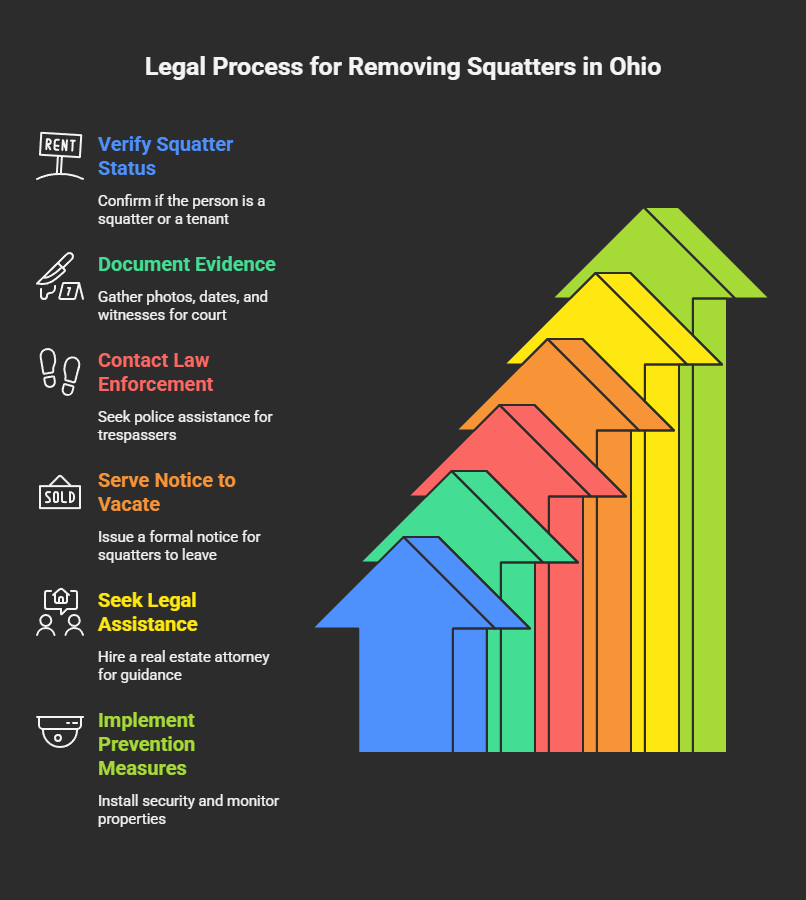
Instead, follow these steps to safely and legally remove a squatter:
- Verify the Situation: Confirm they’re squatters, not holdover tenants or guests. Check for signs like broken entry points or no lease history.
- Document Everything: Take photos, note dates, and gather witnesses. This evidence is crucial for court.
- Contact Law Enforcement: If they’re trespassers (short-term), police can remove them. For squatters claiming rights, it’s eviction time.
- Serve Notice: Issue a formal notice to vacate, typically 3 days for squatters mimicking tenants.
- Seek Professional Help: Hire a real estate attorney familiar with Ohio squatter laws. They can guide you through nuances.
Prevention is better: Install security cameras, post “No Trespassing” signs, and inspect vacant properties regularly. In 2025, smart home tech like remote monitoring apps makes this easier.
If the squatter resists, you’ll need to escalate to formal eviction.
How to Evict a Squatter in Ohio: The Legal Process Explained
Evicting a squatter in Ohio follows the same judicial process as evicting a tenant, known as “forcible entry and detainer.” There’s no squatter-specific law, so use standard eviction rules under Ohio Revised Code Chapter 1923.
Here’s the detailed process as of 2025:
- Serve an Eviction Notice: Give a 3-day notice to leave. For month-to-month-like situations (if they’ve paid any “rent”), it’s 30 days.
- File a Complaint: If they don’t leave, file with your local municipal or county court. Include details like property address and squatter’s actions. Filing fees are around $100–$200.
- Court Hearing: The court schedules a hearing within 30 days. Present evidence; the squatter can argue adverse possession if applicable (rare before 21 years).
- Judgment and Writ: If you win, the court issues a Writ of Execution. The sheriff enforces it, removing the squatter (usually within 10 days).
- Appeals and Costs: Squatters can appeal, dragging it out. Expect legal fees of $1,000–$5,000, plus potential property damage.
In high-profile cases, like those reaching the Ohio Supreme Court, costs skyrocket. A 2024 ruling reaffirmed the 21-year rule, with no 2025 updates changing it.
Special cases: If the property is foreclosed, banks have streamlined processes. For squatter settlements, involve zoning boards for faster action.
Throughout, respect due process—skipping steps could invalidate your case.
Protective Measures for Property Owners Under Ohio Squatter Rights
To avoid squatter headaches, proactive steps are vital:
- Regular Inspections: Visit vacant properties bi-weekly.
- Secure the Property: Board windows, install alarms, and use motion lights.
- Maintain Records: Keep tax payments current; unpaid taxes weaken your claim.
- Insurance Review: Standard policies might not cover squatter damage—add endorsements.
- Community Watch: In neighborhoods prone to squatting, form alliances with locals.
In 2025, Ohio’s real estate market sees more vacant homes due to remote work shifts, heightening risks. Staying informed via resources like the Ohio Bar Association helps.
Potential Consequences and Limitations of Squatter Rights in Ohio
For squatters, failing adverse possession means eviction and possible criminal charges. For owners, inaction risks losing property—though rare, it happens.
Limitations: Government-owned land is immune to adverse possession. Disabilities (e.g., owner is a minor) can extend the 21-year period.
Balancing act: These laws encourage land use but protect owners via long timelines.
Additional Resources for Navigating Ohio Squatter Laws
- Ohio Revised Code (online at codes.ohio.gov)
- Local Legal Aid Societies
- Real Estate Attorneys via the Ohio State Bar Association
- HUD resources for foreclosed properties
Consult professionals—DIY can backfire.
Conclusion: Protecting Your Property in Ohio’s Evolving Landscape
Ohio squatter rights via adverse possession offer a path to ownership after 21 years, but strict conditions make it tough. By understanding what a squatter is, differentiating from trespassers, and knowing eviction steps, you can safeguard your investment. Whether facing a single squatter or a settlement, act swiftly and legally.
Stay vigilant in 2025’s housing market. If you’re a landlord or owner, this knowledge empowers you. Hopefully, you never need it, but if you do, you’re prepared.
Frequently Asked Questions (FAQs)
What is the difference between a squatter and a trespasser?
A squatter occupies property long-term without permission, potentially claiming rights via adverse possession after 21 years in Ohio. A trespasser enters briefly without any ownership intent and can be removed immediately.
How can property owners protect themselves from squatters?
Regular inspections, security measures like signs and locks, current tax payments, and legal consultations deter squatters effectively.
What different squatter rights exist in different states?
Rights vary: California requires 5 years plus taxes; Texas needs 10 years. Ohio’s 21-year period is among the longest, without tax requirements.
What is the difference between squatting and trespassing?
Squatting involves ongoing occupation with possible legal claims; trespassing is short-term illegal entry without claims.
Can squatters gain rights faster in squatter settlements?
No—adverse possession is individual. Settlements may face collective evictions via zoning laws.
How long does eviction take in Ohio?
Typically 30–60 days from notice to removal, longer with appeals.
Is adverse possession common in Ohio?
Rare due to the 21-year requirement, but cases do occur in neglected rural areas.