What Is a Triple Net Lease (NNN) ? Benefits, Risks, and FAQs
If you’re diving into the world of commercial real estate investing or leasing for the first time, you may come across a term that pops up frequently: Triple Net Lease (NNN). It’s one of the most common lease structures out there, and for good reason. But what is a triple net lease, really? How does it work, and why do landlords and tenants alike often prefer it? In this beginner’s guide, we’ll break down everything you need to know about triple net leases in a simple, clear, and engaging way.
What Is a Triple Net Lease?
Let’s start with the basics. A triple net lease (NNN) is a type of commercial lease where the tenant agrees to pay three main additional costs on top of their base rent:
- Net property taxes
- Net building insurance
- Net common area maintenance (CAM)
Each of these expenses is referred to as a “net,” which is how the term “triple net” came to be.
This arrangement is different from a gross lease, where the landlord covers most or all of these costs. In an NNN lease, the tenant takes on more financial responsibility, which can create advantages for both parties.
What Does Triple Net (NNN) Stand For?
In an NNN lease:
- Net 1: Property Taxes – The tenant pays their share (or the entire amount, if they are the sole occupant) of the real estate taxes on the property.
- Net 2: Building Insurance – The tenant contributes to or pays the entire cost of insuring the building.
- Net 3: Maintenance Costs – Tenants handle costs associated with upkeep of shared areas or the entire building, depending on the lease agreement.
In many cases, this structure results in a lower base rent since the tenant is shouldering a larger share of the property’s operating costs. For landlords, it means a more predictable and streamlined income.
How Does a Triple Net Lease Work?
So how does a triple net lease actually work in practice?
Let’s say a tenant signs a lease for a retail space in a shopping center. In addition to their monthly rent, they’re also responsible for a portion of the building’s property taxes, the landlord’s insurance policy, and costs to maintain common areas like parking lots and hallways.
Example Breakdown:
- Base Rent: $2,000/month
- Property Taxes: $300/month
- Insurance: $150/month
- Maintenance (CAM): $250/month
Total Payment: $2,700/month
Each month, the tenant sends a single payment covering all of these costs. It’s transparent and consistent — and often more manageable for accounting purposes.
Single Tenant Triple Net Lease: A Popular Setup
A single tenant triple net lease is exactly what it sounds like: a triple net lease with only one tenant occupying the entire building.
These types of leases are common in:
- Fast-food franchises
- Banks
- Pharmacies
- Big-box retail stores
The reason? It makes things simple. The single tenant has full control over the property and knows what to expect in terms of costs. The landlord enjoys steady, low-maintenance income.
This lease type is especially attractive to investors looking for a hands-off investment. Many NNN properties with a single tenant are leased to creditworthy businesses on 10–15 year terms.
Comparing Lease Types: Single, Double, and Triple Net
To really understand the triple net lease, it helps to compare it with its cousins: the single net lease and double net lease.
| Lease Type | Expenses Paid by Tenant |
|---|---|
| Single Net Lease | Property Taxes |
| Double Net Lease | Property Taxes + Insurance |
| Triple Net Lease (NNN) | Property Taxes + Insurance + Maintenance |
As you can see, the triple net lease places the greatest financial responsibility on the tenant. But with that responsibility often comes more control over the space and potentially lower base rent.
Benefits of Triple Net Leases for Landlords
If you’re a property owner, NNN leases come with several attractive perks:
- Lower Risk: Operating expenses are passed to tenants, protecting you from fluctuating costs.
- Predictable Income: Monthly rental income remains steady.
- Minimal Involvement: With tenants handling taxes, insurance, and maintenance, your role becomes more passive.
- Long-Term Stability: These leases often span 10–20 years with built-in rent escalations.
It’s no surprise many real estate investors actively seek out single tenant triple net lease opportunities for long-term, low-stress income.
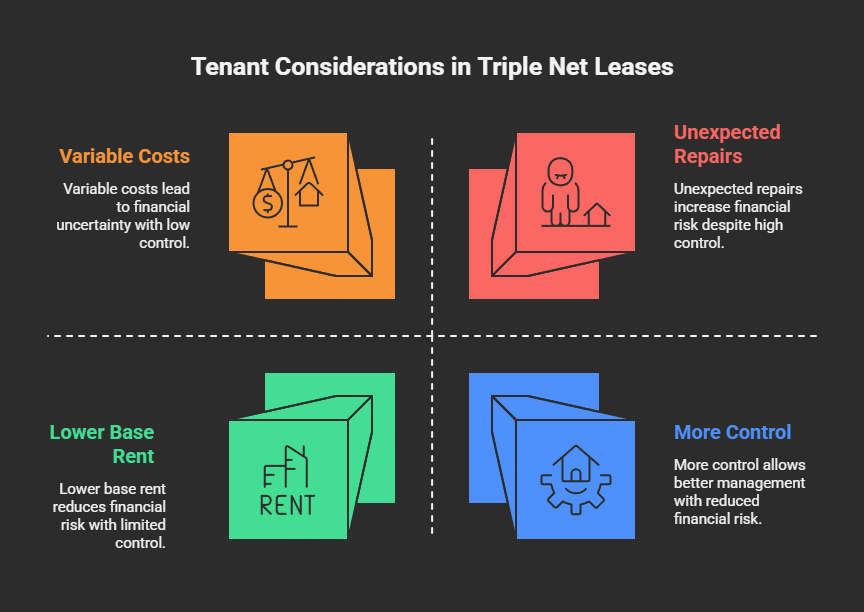
Considerations for Tenants in a Triple Net Lease
For tenants, triple net leases offer flexibility and a chance to customize their business space. But they also come with responsibilities:
Pros:
- More Control: Tenants can often manage vendors and maintenance services.
- Lower Base Rent: Since you’re covering more expenses, landlords typically lower the rent.
- Tax Deductions: Many of the costs are business expenses and may be tax-deductible.
Cons:
- Variable Costs: Your monthly payment can rise due to increases in taxes or insurance.
- Unexpected Repairs: Tenants may be surprised by higher-than-expected CAM or maintenance charges.
Before signing, it’s crucial that tenants understand the full scope of their responsibilities.
Triple Net Lease Example: A Real-Life Scenario
Let’s look at a realistic example to understand how these leases play out.
Property: A standalone retail building leased to a national pharmacy chain
Lease Terms:
- Base Rent: $1,200,000/year
- Property Taxes: $60,000
- Insurance: $20,000
- Maintenance: $70,000
Total Rent (Annual): $1,350,000
Monthly Payment: $112,500
This setup gives the landlord consistent income without worrying about day-to-day operations. The tenant, meanwhile, has a high-profile space with full control over upkeep.
When Should Landlords Use a Triple Net Lease?
Not every property or tenant is suited for an NNN lease. However, here are some ideal scenarios:
- Long-Term, Reliable Tenants: National brands or established franchises are perfect candidates.
- Prime Commercial Properties: High-demand locations allow for better lease terms.
- Passive Investment Strategy: Ideal for investors who prefer low-management properties.
That said, landlords should still monitor tenant compliance and be prepared for capital expenditures like roof or HVAC replacement, which aren’t typically passed on.
Tips for Negotiating a Triple Net Lease Agreement
Whether you’re a landlord or tenant, negotiating a triple net lease wisely can save you future headaches.
For Landlords:
- Include annual rent escalations to account for inflation.
- Clearly define structural responsibilities (e.g., roof, foundation).
- Set up automated accounting or software tools for easy tracking.
For Tenants:
- Negotiate expense caps to limit your exposure.
- Understand CAM inclusions—get an itemized breakdown.
- Ask for audit rights to review shared expense calculations.
How to Invest in Triple Net Lease Properties
Investing in NNN properties is a great way to build passive income, especially with a single tenant triple net lease. But how do you get started?
Direct Ownership:
If you’re an accredited investor (net worth over $1M or income over $200K), you can buy NNN properties directly. Look for tenants with strong credit ratings and long-term leases.
Real Estate Investment Trusts (REITs):
Not an accredited investor? No problem. Many REITs specialize in triple net lease properties, allowing you to invest with lower capital and reduced risk.
Final Thoughts: Is a Triple Net Lease Right for You?
Triple net leases are a cornerstone of commercial real estate because they offer clear advantages for both landlords and tenants. However, they’re not one-size-fits-all.
For landlords, especially those pursuing a more passive approach, the reduced management burden and steady income make triple net leases highly appealing. For tenants, particularly established businesses, an NNN lease offers control and stability — provided they understand the costs involved.
FAQs
What is included in NNN charges?
NNN charges—short for triple net lease expenses—usually include three key components:
- Property taxes
- Building insurance
- Common Area Maintenance (CAM)
CAM might cover services like landscaping, exterior lighting, janitorial services (for shared spaces), and parking lot upkeep. These charges are paid by the tenant in addition to the base rent.
Is an NNN lease good for landlords?
Yes, it’s generally favorable. A triple net lease shifts the burden of property expenses—like taxes, insurance, and maintenance—to the tenant. That means landlords enjoy:
- Predictable, passive income
- Lower management responsibilities
- Less exposure to rising property costs
This makes NNN leases a popular choice for property owners seeking hands-off investments.
Who typically uses NNN leases?
Triple net leases are most common in commercial real estate, especially with:
- National retail chains
- Fast food restaurants
- Convenience stores
- Pharmacies
These tenants usually sign long-term leases and prefer to manage their own properties. Landlords benefit from stable income and high occupancy rates with creditworthy single-tenant triple net lease agreements.
What is a single tenant triple net lease?
A single tenant triple net lease is when one tenant occupies and is fully responsible for an entire commercial property. This tenant pays rent plus all property taxes, insurance, and maintenance. These leases are popular with investors because they offer stable, predictable income with minimal management needs.
How long do NNN leases usually last?
NNN leases often span 10 to 25 years, especially with national retail tenants. These long-term agreements provide security for landlords and allow tenants to build brand presence and customer loyalty at a fixed location.
Can residential properties have triple net leases?
Triple net leases are rare in residential real estate. They’re mostly used in commercial settings. However, in some mixed-use developments or custom situations, landlords and tenants may agree on NNN-style terms.
What happens if a tenant breaks a NNN lease early?
Breaking a NNN lease early can lead to penalties, including loss of deposit or ongoing rent obligations until a new tenant is found. Landlords may pursue legal remedies if the lease terms are not honored.