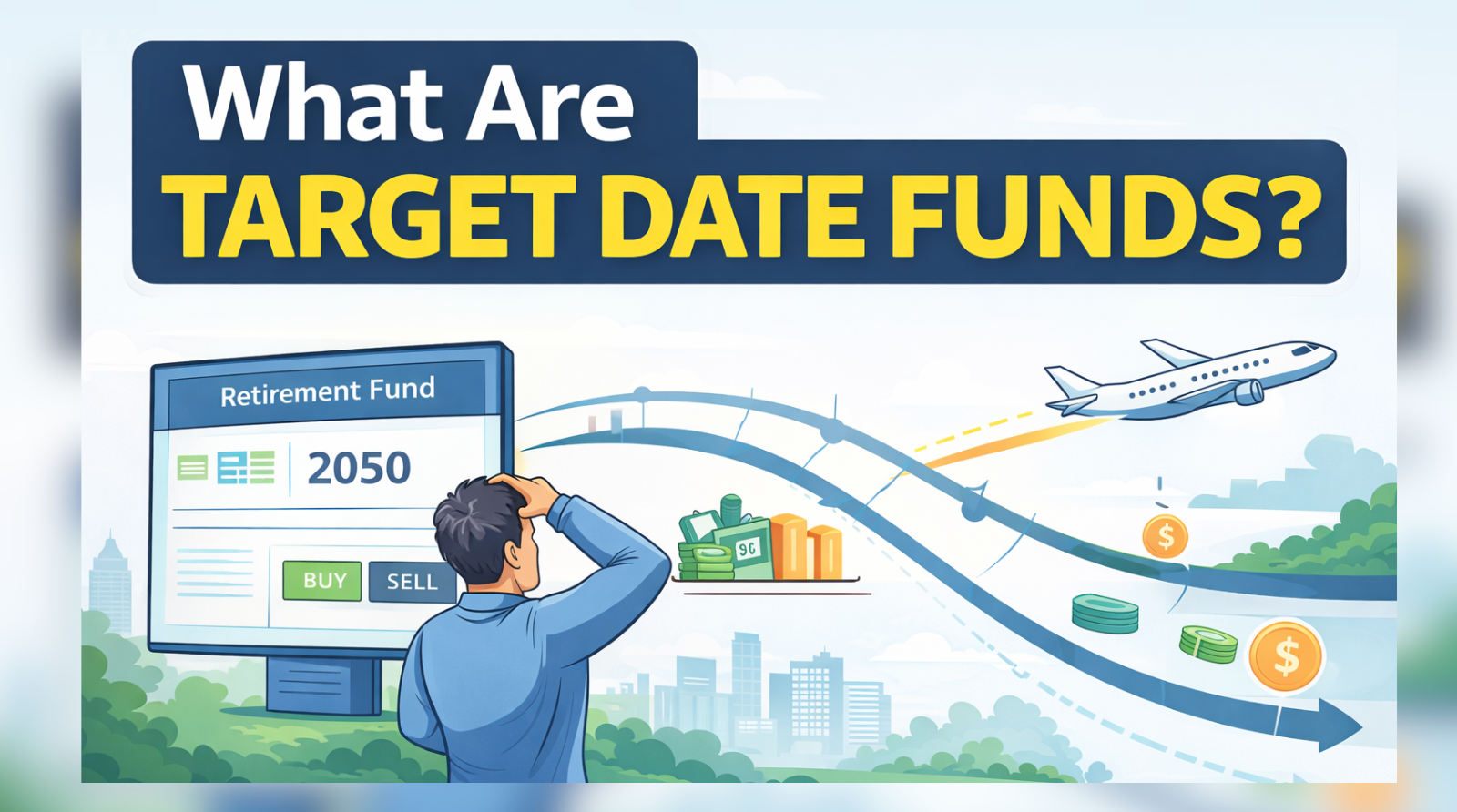
What Are Target Date Funds?
Understanding the Basics of Target Date Funds
If you have ever looked at your retirement account and felt like you were staring at a cockpit of a jet plane, you are not alone. Investing can feel super complicated. But there is one specific type of investment designed to make things easy for everyone. It is called a target date fund. Think of it like an autopilot for your savings. You pick a year that you think you will stop working, usually around age 65, and the fund does the heavy lifting for you.
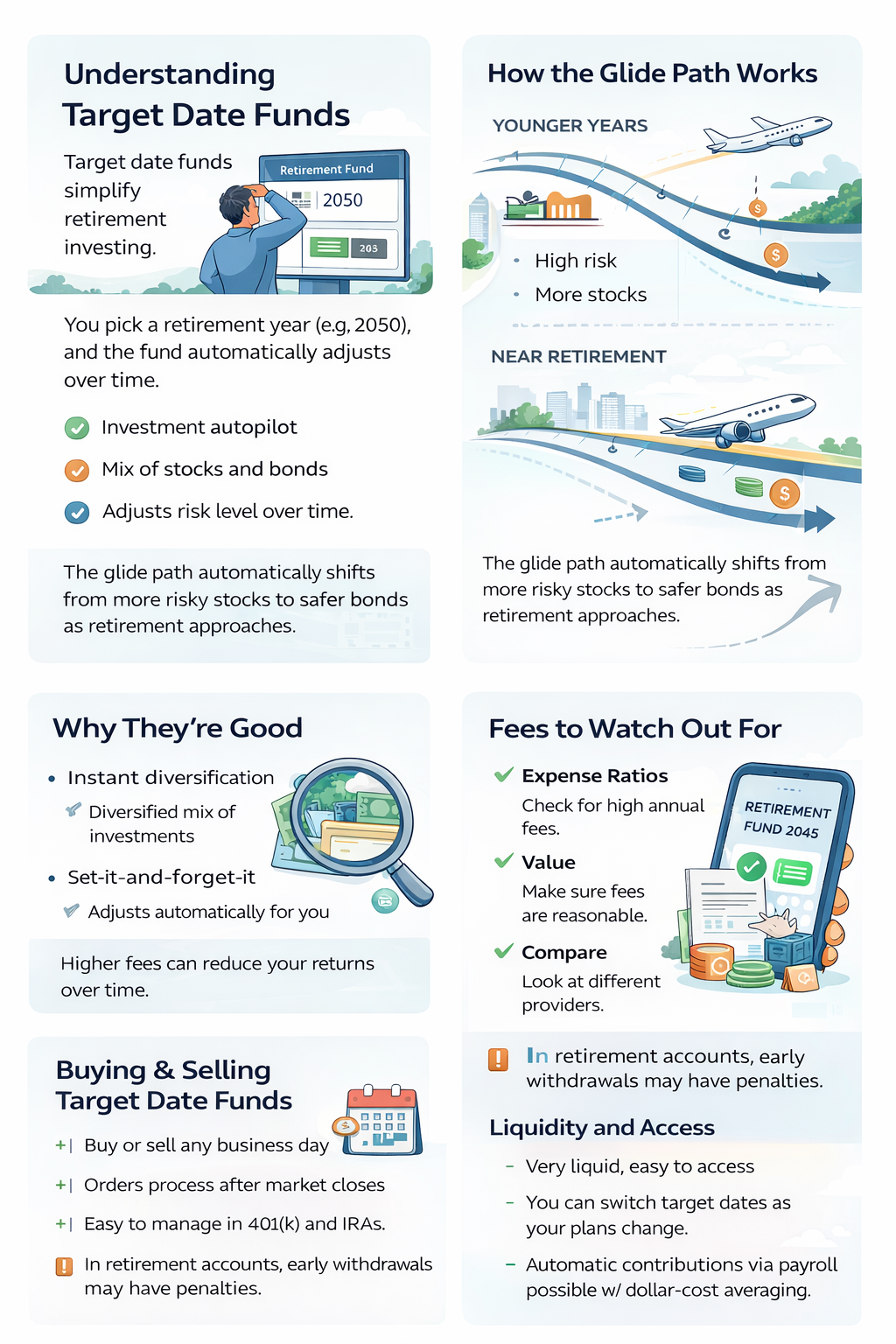
A target date fund is a mix of different investments like stocks and bonds all bundled into one single package. When you are young and have decades of work ahead of you, the fund takes more risks to grow your money fast. As you get closer to that big retirement year, it automatically shifts into safer mode. It is a set-it-and-forget-it strategy that has become the gold standard for many people starting their careers today.
Technology plays a huge role in how these funds are managed now. Much like how is changing how we live, automated financial algorithms are changing how we save. You do not need to be a Wall Street genius to build a portfolio anymore. You just need to know when you want to retire and let the fund handle the math.
How the Glide Path Works
The most important part of a target date fund is something called the glide path. Imagine an airplane coming in for a landing. When the plane is high in the sky, it is moving fast. That represents the early years of your investing when the fund owns lots of stocks. Stocks are exciting because they can grow your money quickly, but they can also be a bumpy ride.
As the plane gets closer to the runway, it slows down and levels out. This is exactly what the fund does as you approach your target year. It starts selling off the risky stocks and buying more bonds and cash-like investments. This shift is automatic. You do not have to log in and change anything yourself. It is a great way to ensure that a market crash right before you retire does not wipe out everything you worked for.
Are Target Date Funds Actually Good
A lot of people wonder if these funds are actually a good deal or if they are just a lazy way to invest. The truth is that for most people, they are excellent. They provide instant diversification. Instead of buying one single stock, you are buying a tiny piece of thousands of companies across the globe. This spreads out your risk so you are not putting all your eggs in one basket.
However, you should keep an eye on the fees. Every fund has a price tag called an expense ratio. Some target date funds are very cheap, while others can be quite expensive. It is always smart to check the fine print. If the fees are too high, they can eat into your profits over time. You want to make sure you are getting value for your money, just like when you are checking the before making a big purchase and check common mistakes while investing.
The Convenience Factor
The biggest selling point is convenience. Most people do not want to spend their weekends reading balance sheets or watching financial news. Life is busy. Target date funds give you your time back. They rebalance themselves every year. This means if the stock market does really well, the fund will sell some gains to keep your risk level exactly where it should be.
It is a disciplined approach that prevents emotional investing. Many people panic when the market goes down and sell their stocks at the worst possible time. Because target date funds are designed for the long haul, they help you stay the course. They are built for the marathon, not the sprint. This is especially useful when managing assets in a 401k account where you want steady growth over decades.
When Can You Buy and Sell These Funds
You can buy or sell target date funds pretty much any business day that the stock market is open. They are usually structured as mutual funds. This means they do not trade instantly like a stock on an app. Instead, all orders are processed at the end of the day after the market closes. If you put in a request to sell at 10 AM, it will actually happen at the closing price that evening.
One thing to remember is where you are holding the fund. If it is in a 401k or a Roth IRA, there might be tax rules about taking money out. You can switch from one target date fund to another inside those accounts without a problem. But if you try to take the cash out of the account entirely before you are 59 and a half, the government might charge you a penalty. Always check the rules of your specific retirement plan first.
Liquidity and Access
Liquidity refers to how fast you can turn an investment back into cash. Target date funds are very liquid. If you decide you want to change your strategy, you can usually exit the position within 24 hours. They are not like real estate where it takes months to sell a house. This flexibility is nice because life changes. Maybe you decided you want to retire five years earlier than you originally planned. You can simply sell your 2050 fund and buy a 2045 fund instead.
Buying them is also very easy. Most brokerage apps allow you to set up automatic contributions. You can have fifty dollars taken out of your paycheck every month and sent straight into the fund. This is called dollar-cost averaging. It is one of the smartest ways to build wealth because you are buying more shares when prices are low and fewer when prices are high. It takes the guesswork out of the timing.
Frequently Asked Questions About Target Date Funds
What happens after I reach the target date ?
Most funds do not just disappear when you reach the year on the label. Instead, they reach their most conservative point. They will hold mostly bonds and cash to provide you with a steady income during your retirement years. Some funds stay at that level forever, while others might eventually merge into a general retirement income fund.
Can I lose money in a target date fund ?
Yes, it is possible. Because these funds contain stocks, their value will go up and down with the market. However, because they are diversified, they are generally less risky than owning just one or two stocks. The risk level also drops significantly as you get closer to your retirement date.
Do I need more than one target date fund ?
Usually, no. The whole point of a target date fund is to be your entire portfolio. If you buy multiple target date funds with different years, you are just making things more complicated for yourself. It is better to pick the one that matches your expected retirement year and stick with it.
How do I pick the right year ?
Look at the year you were born and add 65. If you were born in 1995, your retirement year is roughly 2060. You would look for a fund with 2060 in the name. If you want to retire earlier, pick an earlier year. If you plan to work longer, pick a later one.
Are these funds only for retirement ?
While they are designed for retirement, you can use them for any long-term goal. If you are saving for a child’s college education that is 15 years away, you could technically use a target date fund for that as well. However, most people use them specifically for their 401k or IRA accounts.
What are the main downsides ?
The main downsides are the lack of control and the potential for higher fees. You cannot choose which specific companies the fund invests in. You are trusting the fund manager to make those choices for you. For some people who like to pick their own stocks, this might feel a bit boring.
Do these funds pay dividends ?
Yes, they do. Since the fund owns stocks and bonds, it collects dividends and interest. Usually, these are automatically reinvested back into the fund to buy more shares for you. This helps your money grow even faster through the power of compounding interest.
Is a target date fund better than a robo-advisor ?
It depends on what you want. A target date fund is a single product you buy. A robo-advisor is a service that manages multiple different funds for you. Target date funds are often simpler and sometimes cheaper, but robo-advisors can offer more customization for your specific tax situation.