Personal Finance Tips for Young Professionals: Building Wealth Early
Introduction: Why Young Professionals Must Master Personal Finance
Money is one of the most powerful tools you’ll ever manage—but most of us aren’t taught how to handle it in school. As a young professional, your 20s and early 30s are a critical window to lay the foundation for financial independence. The habits you build now will compound for decades, shaping your ability to buy a home, start a family, travel, or retire comfortably.
The good news? You don’t need a finance degree to master personal finance. With a few smart strategies, you can take control of your money, reduce financial stress, and build lasting wealth.
This guide covers practical, no-nonsense personal finance tips for young professionals that you can start applying today.
What Is Personal Finance? (And Why It Matters Now)
Personal finance is simply how you manage your money earning, spending, saving, investing, and protecting it. For young professionals, this means making smart choices now to avoid stress later. Think of it as building a foundation: the stronger it is today, the more freedom you’ll have tomorrow.
- Budgeting and tracking spending
- Saving for goals (emergency fund, vacation, home)
- Paying off debt
- Building credit
- Investing for the future
- Planning for life’s surprises
It’s not about being rich. It’s about making intentional choices so you can live with less stress and more freedom.
Why Young Professionals Need to Act Now
You don’t need to be a millionaire to benefit from good financial habits. In fact, starting early is your biggest advantage.
Here’s why:
- Compound interest rewards time. The earlier you invest, the more your money grows—passively.
- Small habits compound. Saving $100/month at 25 turns into over $200,000 by 65 (with a 7% annual return).
- Debt gets heavier over time. The longer you carry high-interest credit card balances, the more you pay in interest.
- Life throws curveballs. A medical emergency, job loss, or car repair can derail you if you’re not prepared.
17 Essential Personal Finance Tips for Young Professionals
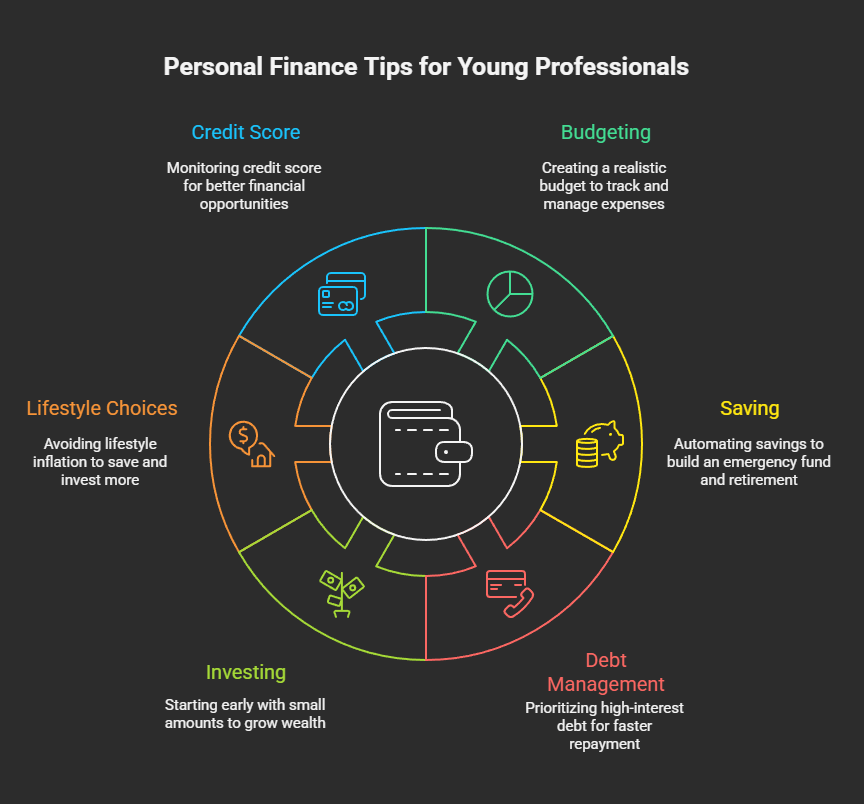
1. Create a Realistic Budget (That You’ll Actually Stick To)
Forget the idea that budgeting means deprivation. A good budget isn’t about cutting out all fun, it’s about knowing where your money goes so you can spend intentionally.
Start with:
- Income: Take-home pay after taxes
- Fixed expenses: Rent, utilities, insurance, loan payments
- Variable expenses: Groceries, dining out, entertainment
- Savings & debt payments: Emergency fund, retirement, credit cards
Use the 50/30/20 rule as a starting point:
- 50% needs
- 30% wants
- 20% savings and debt repayment
Pro Tip: Use a budgeting app like You Need A Budget (YNAB) or Mint to automate tracking.
2. Pay Yourself First
Too many people save what’s “left over” at the end of the month. Spoiler: there’s rarely anything left. Instead, automate your savings. The day after payday, set up automatic transfers to:
- Your emergency fund
- Retirement account
- Debt repayment
Treat savings like a non-negotiable bill—because it is.
3. Build an Emergency Fund (Yes, Even If You’re Broke)
Life happens. Your car breaks down. You get sick. You lose your job. An emergency fund is your financial safety net. Aim for 3–6 months of living expenses saved in a high-yield savings account.
Start small: $500, then $1,000, then keep going. Even a little cushion prevents you from going into debt when surprises hit.
4. Know Your Net Worth
One of the most important steps in managing your personal finances is understanding your net worth. Simply put, your net worth is the difference between what you own (your assets) and what you owe (your liabilities). Tracking this number monthly gives you a clear picture of your financial health and progress. Even if your net worth is negative at first—because of student loans or credit card debt—seeing gradual improvement over time can be incredibly motivating.
Assets include:
- Cash in bank accounts
- Investments
- Real estate
- Vehicles
Liabilities include:
- Student loans
- Credit card debt
- Car loans
- Mortgage
5. Tackle High-Interest Debt First
Not all debt is created equal. Focus on paying off high-interest debt (like credit cards) first.
Use one of two popular methods:
- Debt Snowball: Pay off smallest balances first for quick wins.
- Debt Avalanche: Pay off highest-interest debt first to save money.
Both work—pick the one that keeps you motivated.
6. Use Credit Cards Wisely (Or Not at All)
Credit cards themselves aren’t bad, but carrying a balance can quickly lead to high-interest debt and financial stress. Used responsibly, credit cards can help you build credit, earn rewards, and simplify transactions. However, if you tend to overspend or struggle with self-control, it may be better to stick with a debit card until your habits improve.
Tips for using credit cards responsibly:
- Pay the full balance every month to avoid interest charges
- Never spend more than you have in your bank account
- Choose a card with rewards that fit your lifestyle (cashback, travel points)
- Consider using debit only if you tend to overspend until you build better habits
7. Maximize Employer Benefits
This is free money you’re leaving on the table if you ignore it.
Ask yourself:
- Does your company offer a 401(k) match? Contribute enough to get the full match—it’s a 100% return on investment.
- Do they offer HSAs or FSAs? Use them to save on medical expenses.
- Are there tuition reimbursement or student loan assistance programs? Take advantage.
These benefits can add thousands to your annual compensation.
8. Start Investing—Even If It’s $25/Month
You don’t need a finance degree to start investing, and you certainly don’t need a large sum of money. The most important step is simply to begin. Even small, consistent contributions grow significantly over time thanks to compound interest. Starting early is far more important than trying to perfectly time the market.
Ways to get started with investing:
- Use a robo-advisor like Betterment or Wealthfront for hands-off investing
- Open an IRA or 401(k) with low-cost index funds
- Use apps like Acorns or SoFi Invest for automated, beginner-friendly investing
9. Avoid Lifestyle Inflation
Receiving a raise or bonus is exciting, but immediately upgrading your lifestyle can prevent you from building long-term wealth. Instead, consider saving or investing the extra income. By doing this consistently, you’ll quietly grow your wealth while others remain trapped in a paycheck-to-paycheck cycle.
Tips to avoid lifestyle inflation:
- Save or invest a portion (or all) of any salary increase
- Delay major purchases until you’ve fully funded savings goals
- Focus on experiences and personal growth rather than material upgrades
- Track spending to ensure lifestyle choices don’t outpace income
10. Track Your Credit Score (For Free)
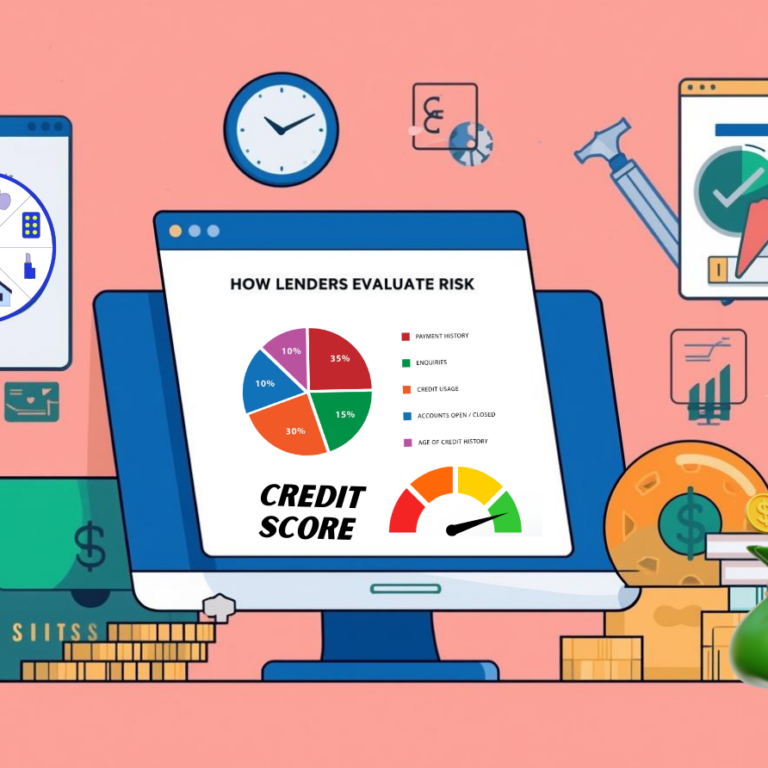
Your credit score plays a major role in your financial life, affecting everything from renting an apartment to qualifying for loans or credit cards. Monitoring your credit score regularly helps you catch errors, understand your financial health, and make informed decisions. Aim for a score above 700 (good) or 750+ (excellent) to access the best rates and opportunities.
Ways to track your credit score for free:
- Credit Karma – Free monitoring and alerts
- Experian – Access your Experian credit report and FICO score
- Credit Sesame – Provides free score tracking and tips
- Regularly review for errors and unusual changes
11. Set SMART Financial Goals
Vague goals like “save more” rarely lead to results. To make your financial plans actionable, use the SMART framework. SMART goals are clear, measurable, and time-bound, helping you stay focused and motivated. Writing them down, tracking progress, and celebrating small wins keeps you on track and accountable.
How to set SMART financial goals:
- Specific: Clearly define your goal, e.g., “Save $5,000 for a vacation”
- Measurable: Quantify your progress, e.g., “Put $200/month into a travel fund”
- Achievable: Ensure the goal is realistic based on your income and expenses
- Relevant: Align your goal with your values and priorities
- Time-bound: Set a clear deadline, e.g., “By December 2025”
12. Learn to Say No (Without Guilt)
FOMO (fear of missing out) can be expensive. Social outings, coworker lunches, or spontaneous purchases may seem small, but they add up quickly. You don’t need to say no to everything, but it’s important to spend intentionally—on things that truly matter to you and cut back on what doesn’t. This approach ensures your money aligns with your priorities and values.
Tips for saying no without guilt:
- Prioritize spending on experiences or items that truly matter to you
- Skip unnecessary purchases, like trendy boutiques or frequent takeout
- Set personal spending limits for discretionary expenses
- Communicate politely when declining invitations or purchases
- Review monthly spending to see where you can reduce without sacrificing joy
13. Use Windfalls Wisely
Receiving unexpected money—like a tax refund, work bonus, or gift—can be exciting, and it’s tempting to spend it all at once. However, using windfalls strategically can significantly strengthen your financial foundation. Allocating these funds toward long-term goals ensures that even small windfalls contribute to building wealth and security.
Ways to use windfalls effectively:
- Pay down high-interest debt to reduce financial stress
- Add to your emergency fund to increase your safety net
- Invest in retirement accounts for long-term growth
- Split wisely: consider putting half toward financial goals and half toward enjoyment
14. Unsubscribe from Sales Emails
It may seem like a small step, but unsubscribing from marketing emails can have a big impact on your finances. Constantly seeing messages like “20% off your favorite jeans” can tempt you to spend unnecessarily, even when you don’t need the items. Reducing these triggers helps you save money effortlessly and keeps your financial goals on track.
Tips for cutting email temptation:
- Unsubscribe from promotional and sales emails from retailers
- Use a separate email account for newsletters and marketing
- Delete or archive old emails that encourage impulse spending
- Set boundaries: only check shopping or promo emails intentionally
- Track savings from avoided impulse purchases to reinforce the habit
15. Talk About Money (Yes, Really)
Money can feel awkward to discuss, but avoiding financial conversations often leads to stress, misunderstandings, and poor decisions. Being open about money allows you to make informed choices, align priorities, and build financial confidence—whether you’re in a relationship or single.
Ways to talk about money effectively:
- Discuss spending habits openly with your partner or trusted friend
- Share debt obligations and repayment plans
- Set financial goals together or with a “money buddy”
- Review bills and budgets collaboratively
- Normalize money conversations to reduce stress and improve decision-making
16. Meal Plan to Save Hundreds a Month
Food is one of the easiest areas to overspend. Planning your meals in advance not only saves money but also reduces stress during busy weeks. By intentionally deciding what to cook and purchase, you can avoid impulse buys, limit food waste, and cut down on expensive takeout.
Tips for effective meal planning:
- Check what ingredients you already have before making a shopping list
- Plan 4–5 dinners for the week to simplify cooking
- Buy only the items you need for your planned meals
- Prepare ingredients ahead of time to make weeknight cooking easier
- Track your spending on groceries to see how much you’re saving
17. Sell What You Don’t Use
Unused items around your home—like an old laptop, designer bag, or gym equipment—take up space and tie up potential cash. Selling them not only declutters your space but also provides extra money that can be put toward savings, debt, or investing. Many young professionals are surprised by how much extra income they can generate this way.
Ways to sell unused items:
- Facebook Marketplace – Quick local sales for furniture, electronics, and more
- Poshmark – Great for clothing and accessories
- OfferUp or eBay – Broader audience for tech, collectibles, or niche items
- Consider putting all proceeds toward your emergency fund, debt repayment, or savings goals
Final Thoughts: You Don’t Have to Be Perfect—Just Consistent
Personal finance isn’t about perfection—it’s about steady progress. Some months you may overspend or feel stuck, and that’s completely normal. The important part is showing up consistently: reviewing your budget, making your savings transfers, and paying a little extra toward debt. Small, repeated actions accumulate into significant financial growth over time.
Key takeaways for consistent financial progress:
- Review your budget regularly to stay on track
- Automate savings and debt payments whenever possible
- Celebrate small wins to maintain motivation
- Start even with small amounts—you don’t need to be rich to begin
- Begin today; the best time to start was yesterday, the second-best time is now
FAQ Section
Q1. What is personal finance?
Personal finance is the management of your money, including budgeting, saving, investing, debt repayment, and planning for future goals. It’s all about using money as a tool to improve your life, build security, and create financial freedom.
Q2. How much should I save in my 20s?
A good rule is to save at least 20% of your income. If that feels too high, start with a smaller percentage (5–10%) and increase it gradually. The earlier you start, the more your money grows thanks to compound interest.
Q3. Should I pay off debt or invest first?
If your debt carries a high interest rate (like credit cards above 15–20%), pay that off first. For lower-interest loans (like student loans or mortgages), you can balance repayment with investing, especially if you have access to employer retirement matches.
Q4. What is an emergency fund and how much should I have?
An emergency fund is money set aside to cover unexpected expenses like job loss, medical bills, or car repairs. Aim for 3–6 months of living expenses in a separate savings account.
Q5. How can young professionals start investing with little money?
Begin with low-cost index funds, ETFs, or micro-investing apps that let you start with as little as $10. Consistency matters more than the amount—you’ll benefit most by starting early.