
How do i remove charge off from my credit?
Introduction
A charge-off on your credit report can stop you cold. It shows up like a red flag when you apply for a loan. Or try to rent a place. Or even get a better job that checks credit. That one word—”Remove Charge Off Without Paying”—carries a lot of weight. It makes you look risky to lenders.
But what is it really? A charge-off happens when you miss payments for months. Usually around six months. The bank or creditor says, “Fine, we won’t count on this money anymore.” They write it off as a loss on their books. It helps their taxes. But for you? The debt doesn’t vanish. You still owe it. And it sits on your credit report like a stain.
This guide walks you through it all. What a charge-off means. How long it lingers. The hit it takes on your score. And the real ways to deal with it—especially if paying the full amount isn’t on the table right now. We’ll cover disputes. Goodwill letters. Negotiations. And just waiting it out. Plus, how to rebuild after. No fluff. Just steps you can take today.
I know this stuff from talking to folks who’ve been there. One guy I know, Mike, had a $2,000 medical bill charge off after he lost his job in 2020. It tanked his score to 520. But he disputed errors and waited it out. Two years later, he’s at 680. And he bought a car. Stories like that show it’s doable. Let’s get into it.
What Does “Charge-Off” Mean on a Credit Report?
Picture this. You have a credit card. Life gets tough. Bills pile up. You skip a payment. Then another. By month three, it’s late. Month six? The creditor pulls the plug. They “charge off” the account.
In plain terms, a charge-off is an accounting move. The lender stops expecting payment from you directly. They book it as a bad debt. It reduces their profits on paper. But legally? You owe every penny. Interest might still tick up. Fees too.
After the charge-off, the debt doesn’t just sit idle. Most times, the original creditor sells it to a collection agency. Think of it like selling a used car you can’t fix. The agency buys it cheap—pennies on the dollar—and chases you for the full amount. Sometimes the creditor keeps it and hounds you themselves.
On your credit report, it shows as “charged off.” Or “charge-off account.” It’s a big deal because credit scoring models—like FICO or VantageScore—see it as a major fail. Worse than a late payment. It’s proof you walked away from a debt.
Here’s the thing. Not all charge-offs are from credit cards. Auto loans. Personal loans. Even store cards. Any revolving or installment debt can go this way. And if it’s a joint account? Your co-signer feels the burn too.
One more note. Charge-offs aren’t bankruptcies. But they can lead there if ignored. Collectors might sue. Get a judgment. Garnish wages. So while we’re focusing on removal without paying, keep an eye on the legal side. More on that later.
How Long Does a Charge-Off Stay on Your Credit Report?
The clock starts ticking from the first missed payment. Not the charge-off date. Not when it’s sold. Say you miss July 1, 2023. That’s day zero. The charge-off hits in December. But it falls off July 1, 2030. Seven years total.
Federal law sets this. The Fair Credit Reporting Act (FCRA). It applies to all three bureaus: Experian, Equifax, TransUnion. No exceptions. Even if you pay it off in year five, the mark stays. It might say “paid charge-off.” That’s a tad better. Shows responsibility. But the damage lingers.
Timeline breakdown:
- Months 1-3: Late notations. Score dips 20-50 points each.
- Months 4-5: “Seriously delinquent.” More damage.
- Month 6-7: Charge-off reported. Big drop.
- Years 1-3: Peak pain. Hard to get new credit.
- Years 4-7: Fades. If you build good habits, score climbs.
- After 7 years: Gone. Like it never happened.
But wait. Collections can add another layer. If sold, the collection account has its own seven-year clock. From the original delinquency. You could have two entries for one debt. Double trouble.
Pro tip: Check your reports yearly. Free at AnnualCreditReport.com. Spot if it’s aging wrong. Dispute if the date’s off. That can shave time off early.
How a Charge-Off Affects Your Credit Score
A charge-off is one of the most damaging items on a credit report. It can drop your score by 80 to 150 points, depending on your history.
The effect is stronger if you had good credit before it happened.
Here’s why it hurts:
- It’s marked as a serious delinquency — lenders see it as evidence of risk.
- It damages your payment history, the single biggest factor in credit scoring.
- If the debt is sold to collections, you can get two negative entries for one account (the charge-off and the collection).
Take Sarah’s case. She had a $1,500 charge-off from a gym membership gone wrong in 2019. Score: 580. She ignored it. Focused on her mortgage and cards. By 2023, score hit 720. The charge-off was still there. But lenders cared more about her track record.
The good news?
The impact fades over time. Older charge-offs hurt less than recent ones, especially if you rebuild positive history afterward.
Can You Remove Charge Off Without Paying?
Technically, you can’t force a creditor or credit bureau to delete accurate information. However, there are legal and strategic ways to get it removed or neutralized — without necessarily paying the debt in full.
Let’s break down your options.
1. Dispute Inaccurate or Unverified Charge-Offs
Start by checking all three credit reports — Experian, Equifax, and TransUnion — for the charge-off entry. Look for errors such as:
- Wrong balance
- Incorrect dates
- Duplicate reporting
- Marked as “unpaid” after you settled it
- Account listed past the 7-year limit
If you find inconsistencies, you can dispute the charge-off.
Under the Fair Credit Reporting Act (FCRA), credit bureaus must verify that information is accurate and up to date. If the creditor can’t prove it, the item must be deleted.
You can file disputes online through each bureau’s website or by mail. Provide evidence — payment confirmations, correspondence, or account statements.
2. Request a “Goodwill Deletion”
If your charge-off is legitimate but you’ve since re-established good financial habits, you can try a goodwill deletion.
Write a respectful letter to the original creditor explaining:
- Why the account went delinquent (job loss, illness, emergency)
- What you’ve done since (on-time payments, stable income)
- How a clean report would help you move forward
While they’re under no obligation to remove it, some lenders — especially smaller banks or credit unions — may agree as a courtesy.
3. Negotiate a “Pay-for-Delete” Agreement
A pay-for-delete deal is when you offer to pay the debt (in full or partial) in exchange for the creditor or collector deleting the charge-off from your credit report.
Technically, this practice is discouraged by credit bureaus, but it’s not illegal. Some collectors still accept it informally.
If you attempt this route:
- Always get the agreement in writing before paying.
- Communicate only with the entity currently owning the debt.
- Keep proof of payment and the agreement in your records.
This method can be risky — not every creditor honors it — but some people have successfully removed charge-offs this way.
4. Wait for the Charge-Off to Age Off
If your charge-off is close to the seven-year mark, it might be better to wait. Once the time period ends, credit bureaus automatically remove it.
Paying it off late won’t restart the seven-year clock — that date is fixed from the original delinquency.
During that waiting period, you can improve your credit by:
- Paying all current accounts on time
- Keeping balances low
- Avoiding new hard inquiries
- Using secured credit cards or credit-builder loans
Over time, positive behavior can outweigh the old negative mark.
5. Seek Professional Credit Repair Help (Cautiously)
Reputable credit repair agencies or consumer attorneys can help dispute errors or negotiate with creditors.
But be careful — many “quick fix” companies overpromise and underdeliver.
Always verify:
- They’re registered with the Consumer Financial Protection Bureau (CFPB) or your state’s regulator.
- They don’t charge upfront fees before results.
- They use written contracts and disclose your rights.
If you prefer to do it yourself, you can achieve most of the same results for free.
Why You Should Think Twice Before Paying a Charge-Off
Paying a charge-off doesn’t erase it. It only updates the status from “unpaid” to “paid charge-off.” While this can help with manual reviews (like mortgage underwriting), it won’t remove the negative history.
Sometimes, paying an old charge-off can even lower your score temporarily if it updates the account’s “date of last activity,” making it look more recent.
That said, there are reasons you might choose to pay:
- You plan to apply for a mortgage or auto loan soon.
- You want to avoid lawsuits or wage garnishment.
- The debt amount is small and affordable.
The key is to make a strategic decision — not an emotional one.
How to Rebuild Credit After a Charge-Off
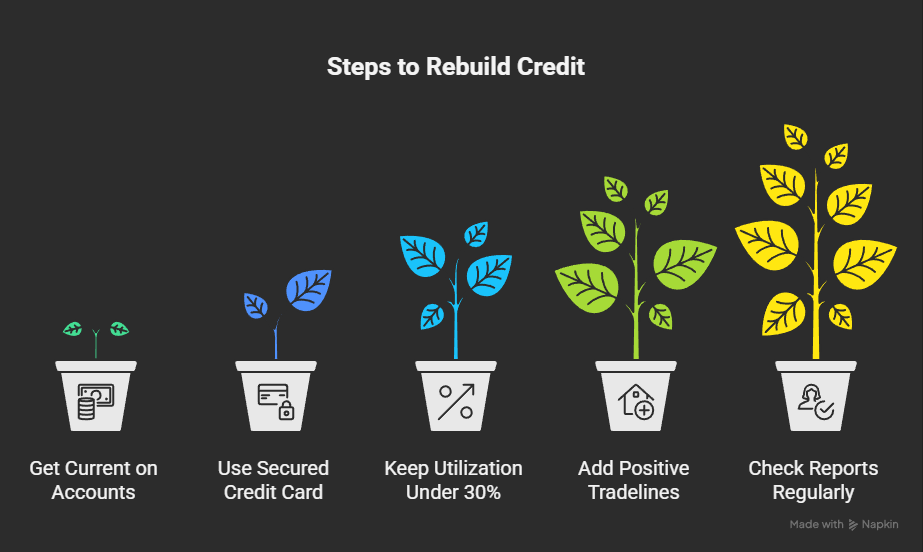
Removing a charge-off isn’t always possible, but recovery absolutely is.
You can still rebuild strong credit within a year or two by taking consistent, smart steps.
Here’s how:
Step 1: Get Current on All Other Accounts
Make sure every open credit card or loan is paid on time.
Even one late payment can slow your progress.
Step 2: Use a Secured Credit Card
A secured card uses a small deposit ($200–$500) as collateral. Use it for small purchases and pay it off monthly. This helps re-establish payment history.
Step 3: Keep Utilization Under 30%
If you have credit cards, don’t max them out. A low balance relative to your limit signals responsibility.
Step 4: Add Positive Tradelines
Rent reporting services like AxcessRent let you build credit by reporting your on-time rent payments — no loans or credit cards needed.
Step 5: Check Reports Regularly
Use free tools like AnnualCreditReport.com to monitor changes and ensure old items drop off as scheduled.
Consistency is more powerful than perfection.
Lenders care about patterns — showing that you’ve learned from mistakes matters more than eliminating every old mark.
Conclusion: Take Control of Your Credit Future
A charge-off is not the end of your financial story.
It’s a setback, but one that can be managed — and even overcome — with patience, planning, and persistence.
Start by verifying the accuracy of your report, disputing errors, and maintaining consistent on-time payments moving forward. Use rent reporting or secured credit tools to rebuild. Over time, your score will recover, and lenders will focus more on your recent behavior than old mistakes.
Remember: you can’t rewrite the past, but you can absolutely shape your financial future.
FAQs About Charge-Offs
What is a charge-off in simple terms?
A charge-off means your creditor gave up collecting directly and wrote off the account as a loss, but you still owe the money.
How to get a charge off removed ?
You can dispute inaccuracies or request goodwill deletions. If the entry is valid and verified, removal without payment is unlikely — but the impact fades over time.
What’s the difference between a charge-off and a collection?
A charge-off is done by the original creditor; a collection happens when that debt is sold to a third party. You can have both on your report for the same account.
How long until a charge-off drops off my credit?
Seven years from the first missed payment that led to the charge-off.
Should I pay off a charge-off or leave it alone?
If it’s recent, large, or preventing you from getting approved for credit, it’s worth paying. If it’s nearly aged off, waiting might be smarter.
Can a charge-off be reopened?
No. Once charged off, it’s closed to new activity, though collection efforts can continue.