Normal Wear and Tear in a Rental: What Every Tenant and Landlord Should Know in 2025
Introduction
When you’re renting a home or apartment — whether you’re the tenant or the landlord — one key question always arises: What is “normal wear and tear in a rental” and how is it different from damage I’m responsible for?
This matters a lot: it affects security deposit refunds, what repairs must be done, and whether you end up paying extra when your lease ends. In this article, we’ll break down the concept of normal wear and tear, show real examples, explain the legal and practical implications, and give tips so both tenants and landlords stay on the same page.
By the end, you’ll know how to document the unit, understand your rights and duties, and avoid unnecessary disputes.
Renting a home or apartment means sharing responsibility for its condition. Landlords maintain the property. Tenants keep it clean and report issues. But what happens at move-out? That’s where normal wear and tear comes in. It protects both sides from unfair charges. This guide explains it clearly. We’ll cover definitions, examples, and tips.
Defining Normal Wear & Tear in rental
The Legal Definition
- According to legal sources, “reasonable wear and tear” means the damage that naturally and inevitably occurs from normal use and aging of a property.
- One state law (Maine) defines “normal wear and tear” as “the deterioration that occurs … without negligence, carelessness, accident or abuse of the premises by the tenant….”
- A tenant resource center states normal wear and tear is the deterioration under normal conditions where the tenant cleans regularly and cares for the premises reasonably.
What It Isn’t
Normal wear and tear does not include damage caused by tenant negligence, misuse, abuse, or accidents. For example: large holes in walls, broken windows, stains from pets or chemicals, etc., typically fall outside the “normal wear and tear” category.
Damage that goes beyond normal aging or use, such as:
- Large holes or deep scratches in walls
- Broken or shattered windows or doors
- Burn marks, large stains, or tears in carpets
- Missing or broken fixtures
- Water damage from neglect
- Deliberate or careless destruction
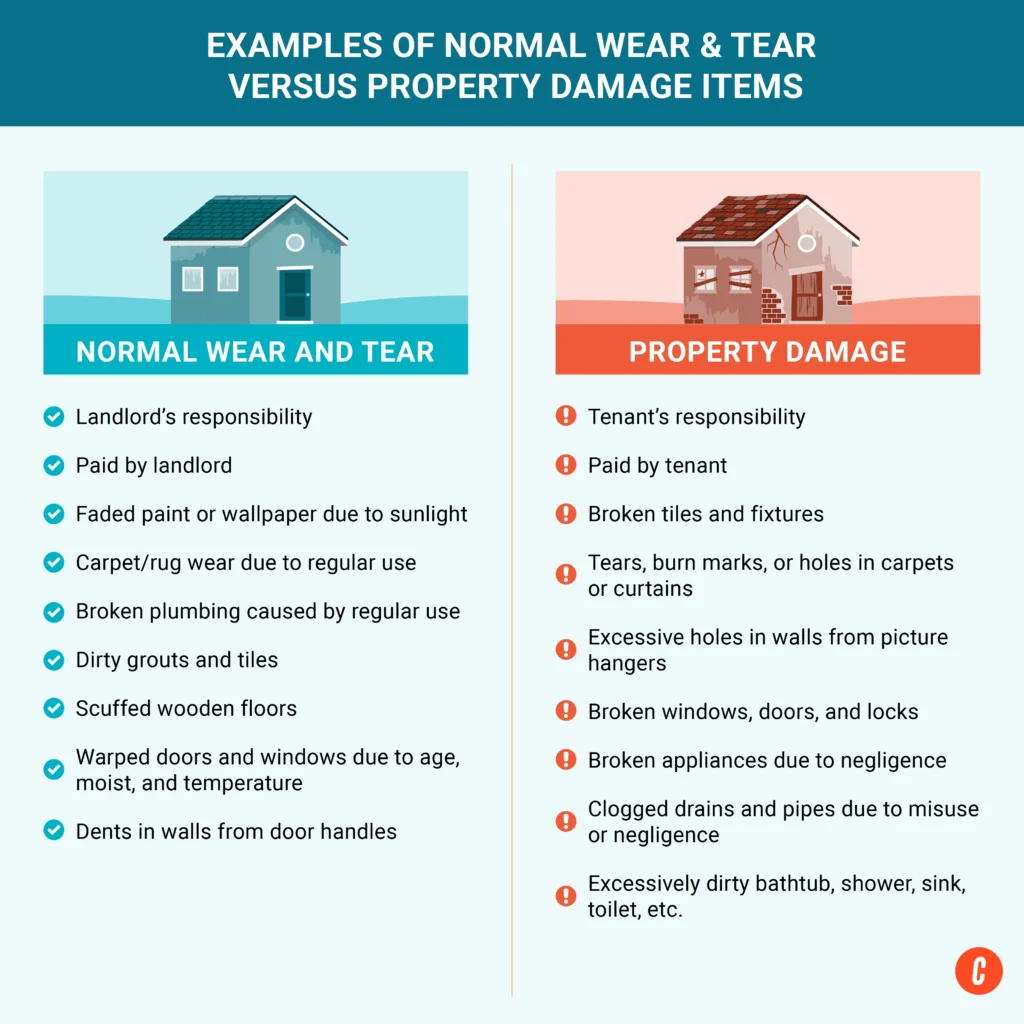
Examples: What Counts as Normal Wear & Tear — and What Doesn’t
Here are practical examples to help illustrate the difference.
Normal Wear & Tear
- Faded or slightly scuffed paint
- Minor nail or tack holes in walls (one or two)
- Worn carpet in high-traffic areas, slight fading
- Loose grout or worn tile in a bathroom from age
- Slightly worn knobs, handles, or hinges from use
- Doors sticking from seasonal settlement
- Minor scratches or marks on floors from normal living
- Curtains or blinds that look faded over time
– These are all listed in HUD and property-management guidelines.
Damage / Beyond Normal Wear
- Large holes in walls, gouges, or multiple screw holes
- Broken windows, torn screens
- Burn or deep stains in carpet, furniture-scale damage
- Unauthorized or extreme modifications to fixtures
- Pet urine or damage beyond expected use
- Missing or broken major components (door ripped off hinge, missing tiles)
– These clearly go beyond the tenant’s obligation under “normal wear.”
Why the Distinction Matters (For Both Tenants & Landlords)
- Security deposits: Landlords cannot deduct from a tenant’s deposit for normal wear and tear — only for damage beyond that.
- Turnover costs: Knowing what is expected wear helps landlords budget for unit turnover, set inspection expectations, and reduce disputes.
- Move-in/out fairness: For tenants, understanding this helps avoid being unfairly charged for painting, carpet cleaning, or repairs that are normal.
- Maintenance & record-keeping: Clear definitions support good communication and documentation, reducing conflict.
How Long Does Normal Wear & Tear Last? What’s Acceptable Over Time?
- Items in the unit have life expectancies (e.g., carpet 5 years, interior paint 3-5 years) which affect what “wear” is acceptable.
- Example: After 3 years of tenancy, some fading of carpet or paint may be expected; after 10 years, more significant replacement may be reasonable.
- Landlords and tenants should evaluate wear within the context of how long the tenant resided, age of materials, and prior condition.
Move-In and Move-Out Inspections: Best Practices
Before the Tenant Moves In
- Conduct a detailed walkthrough with photographs (or video) showing condition of floors, walls, appliances, fixtures.
- Note pre-existing marks, scratches, or wear in a signed move-in checklist.
At Move-Out
- Compare condition to the move-in documentation.
- Distinguish between expected wear and damage.
- Provide tenant with an itemized list if deductions from deposit are proposed.
- Keep timeline and photograph for any repairs or replacements.
How to Leave Your Rental Without Deposit Disputes
- Clean thoroughly (but you don’t have to restore to brand new).
- Patch minor nail holes, wipe scuffs, replace burned-out bulbs.
- Take move-out photos yourself to document your version of condition.
- Communicate with landlord if damage beyond wear occurred (pet stains, accident) and see if mitigation is possible.
- Keep proof of rent payments and any maintenance requests you submitted.
Tips for Landlords: How to Manage Normal Wear & Tear Effectively
- Define in the lease what constitutes damage beyond wear and tear.
- Keep records of life expectancies of materials and items in the unit.
- Perform periodic inspections (with proper notice) to catch issues early.
- Provide clear move-in/out documentation.
- Return security deposits promptly and with itemized deductions if any.
Conclusion
Understanding what counts as normal wear and tear — and what doesn’t — is essential whether you’re renting out a property or moving out of one. For tenants, it protects your security deposit and offers a fair expectation of what you’ll owe. For landlords, it helps you manage turnover, avoid disputes, and maintain your investment.
By documenting conditions, communicating expectations, and using clear move-in/out checklists, you set up a smoother rental experience. Remember: wear and tear is natural and expected. The key is distinguishing it from neglect or abuse. Start on the right foot and both parties will likely end the tenancy on good terms — no surprises, no hidden charges, just fairness and clarity.
FAQs
Can a landlord charge for carpet cleaning when a tenant moves out?
It depends on the mess. Routine cleaning between tenants is usually the landlord’s job. But if the tenant left stains or real damage, they might have to pay for that extra work.
Do nail holes count as damage?
A few small ones from hanging pictures? That’s normal. But if there are tons of big holes or gouges, yeah, that’s on the tenant to fix.
What about smells from smoking or pet stains?
If the place reeks or has burns and big pet marks, that’s not normal wear. Tenants should handle cleaning that up or paying to fix it.
Can a tenant fight back on charges for normal wear?
Sure. Ask the landlord for proof, like photos showing it’s damage, not just use. If they won’t budge, check your local rules and maybe take it to small claims.
How does an item’s age play into repair costs?
Stuff like carpet or paint wears out over time. If it’s only halfway through its life and gets damaged, you don’t pay full price to replace it. Prorate the cost based on what’s left.
Is a chipped countertop from daily use okay?
Light chips from normal cooking? Landlord covers it. But if it’s from dropping a hammer or something careless, tenant pays.
What if the fridge stops working mid-lease?
That’s on the landlord to fix, unless the tenant broke it. Normal breakdowns from age aren’t wear and tear—they’re maintenance.
Do faded curtains or blinds count as damage?
Sun and time fade them. Totally normal, so no charge. But if they’re torn from rough handling, fix it yourself or pay up.
Can landlords make tenants repaint everything?
No, unless the tenant did a bad job or changed colors without okay. Faded walls from living there? Landlord’s dime.
What’s the deal with scuffs on doors or walls?
A couple from bumping furniture around? Fine. But deep scratches or marks from dragging stuff carelessly? Tenant responsibility.