
Why Small Landlords Avoid Rent Reporting ?
Rent reporting lets landlords send tenant rent payments to credit bureaus. It helps tenants build credit. But many small landlords skip it. They have reasons. Some are valid. Others are not. This guide explains why small landlords avoid rent reporting. It also shows why they should try it. We’ll cover common issues. And give tips to make it work.
If you’re a small landlord, you might think rent reporting is too much hassle. Or not worth it. But it can bring benefits. Like better tenants. Less turnover. Even financial perks. In 2025, with high rent prices and tight markets, rent reporting could give you an edge. We’ll address queries like “rent reporting small landlords” and “landlord rent reporting issues.” Read on to see if it’s right for you.
What Is Rent Reporting?
Rent reporting means sending tenant rent payments to credit bureaus. Bureaus like Experian, Equifax, and TransUnion. When tenants pay on time, it boosts their credit score. If they pay late, it can hurt their score. But most services only report good payments.
Landlords can do this through tools like AxcessRent. Or property management software. Some services are free. Others charge a small fee. The goal is to help tenants build credit. But it also helps landlords.
How Does Rent Reporting Work?
- Sign Up: Landlords join a rent reporting service.
- Verify Payments: The service checks if rent is paid on time.
- Report to Bureaus: Payments go to credit bureaus.
- Tenant Consent: Tenants must agree to reporting.
It’s simple. But small landlords often skip it. Let’s see why.
Why Small Landlords Avoid Rent Reporting
Small landlords manage a few properties. They don’t have big teams. So they keep things simple. Here are common reasons they avoid rent reporting.
1. It’s Too Much Work
Small landlords handle everything. Maintenance. Repairs. Tenant issues. Adding rent reporting means more tasks. They must track payments. Send data to services. Deal with tenant questions.
For example, if a tenant pays late, the landlord must decide what to report. This takes time. Many think it’s not worth it. They prefer old ways. Like collecting rent by check or cash.
2. Cost Concerns
Rent reporting services can charge fees. It might cost $10 per month per tenant. For a landlord with 5 units, that’s $50 a month. $600 a year. Small landlords run on thin margins. They see this as an extra expense.
Some services are free for landlords. Tenants pay. But landlords worry tenants won’t like it. Or won’t pay the fee. So they avoid it.
3. Fear of Legal Issues
Rent reporting involves credit bureaus. Landlords worry about mistakes. What if they report a late payment by error? The tenant could dispute it. Or sue.
Laws like the Fair Credit Reporting Act apply. Landlords must be accurate. Small landlords may not know the rules. They fear fines or legal trouble. So they stick to basic rent collection.
4. Privacy Worries
Reporting rent means sharing tenant data. Landlords worry about privacy laws. Like CCPA in California. Or GDPR for international tenants.
They fear data breaches. Or tenant complaints. Small landlords don’t have IT teams. They see it as a risk not worth taking.
5. No Clear Benefit
Many small landlords don’t see the upside. They think rent reporting helps tenants. Not them. They ask: “Why should I do extra work?”
They don’t realize it can attract better tenants. Or reduce turnover. We’ll cover that next.
6. Technical Barriers
Rent reporting often needs software. Small landlords may use paper ledgers. Or simple spreadsheets. Switching to digital tools seems hard.
They worry about learning new systems. Or tech glitches. For older landlords, this is a big hurdle.
7. Tenant Resistance
Some tenants don’t want rent reported. They fear bad marks if late. Or privacy issues. Landlords worry about tenant pushback. Or losing good tenants.
In low-income areas, tenants may not understand credit building. They see it as a threat. Not a help.
These are real concerns. But rent reporting has benefits. Let’s see why small landlords should reconsider.
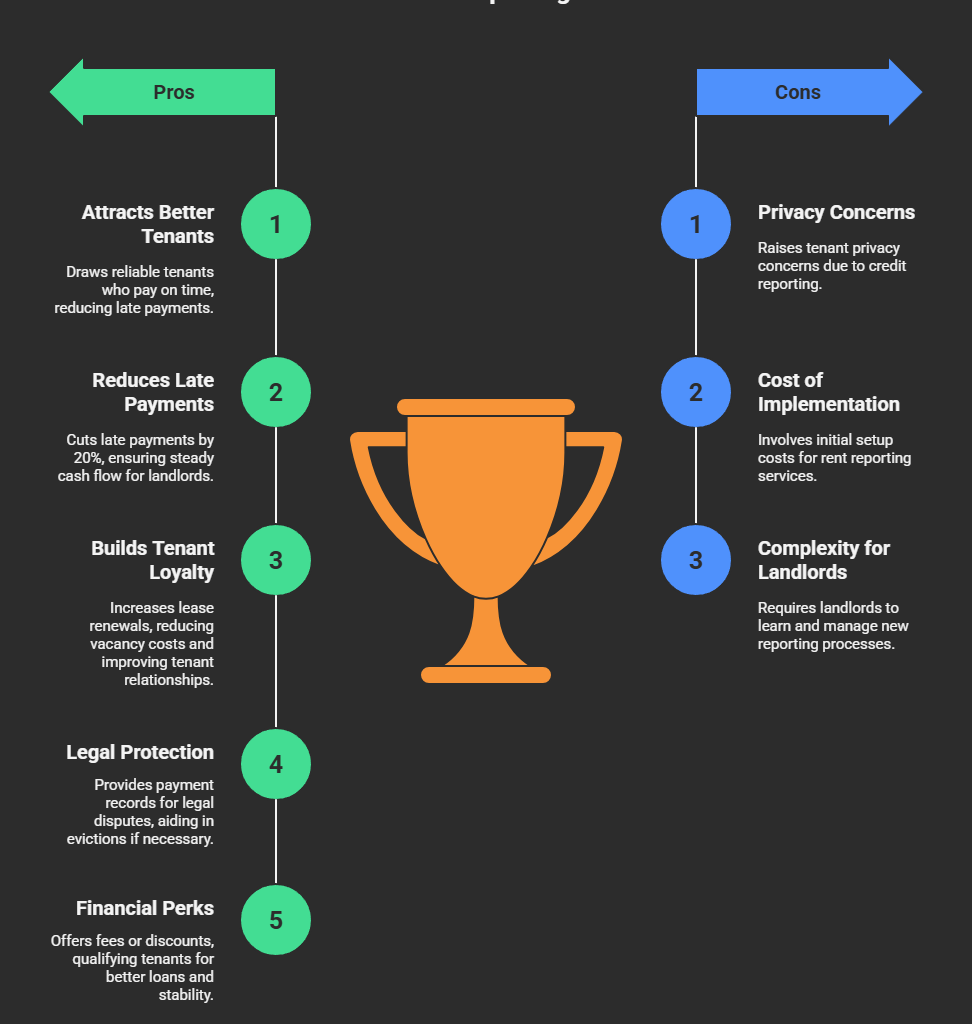
Why Small Landlords Should Use Rent Reporting
Rent reporting has upsides for landlords too. It can make your job easier. And improve your business.
1. Attracts Better Tenants
Rent reporting is a perk. It helps tenants build credit. In 2025, more renters want this. Especially young people and immigrants.
You can market your property as “credit-building friendly.” This draws reliable tenants. They pay on time to boost their score. Less late payments for you.
Example: A landlord in Ohio added rent reporting. Applications increased 30%. Tenants stayed longer. Turnover dropped.
2. Reduces Late Payments
When tenants know payments report to credit bureaus, they pay on time. No one wants a bad mark on their credit.
A study by TransUnion found rent reporting cut late payments by 20%. For small landlords, this means steady cash flow. Less chasing for rent.
3. Builds Tenant Loyalty
Rent reporting shows you care. Tenants feel valued. They renew leases more often. This cuts vacancy costs.
For low-income tenants, it’s a big help. They build credit without extra debt. They appreciate it. This leads to better relationships.
4. Legal Protection
Rent reporting creates records. It tracks payments. This helps in disputes. If you need to evict, you have proof.
New laws in 2025 encourage rent reporting. The Credit Access and Inclusion Act makes it easier. It could become standard.
5. Financial Perks
Some services pay landlords a fee. Or offer discounts on management tools. AxcessRent has programs for landlords.
Reported rent can qualify tenants for better loans. They become more stable. Less risk for you.
6. Easy to Set Up
Many services are simple. AxcessRent handles reporting. You just verify payments. No extra work.
For small landlords, start with one property. See how it goes. Expand if it works.
7. Helps Underserved Groups
Small landlords often serve low-income or immigrant tenants. Rent reporting helps them. It builds community trust. Happy tenants refer others.
In areas with high immigrant populations, this is a selling point. Tenants see you as supportive.
These benefits outweigh the concerns. With the right approach, rent reporting can improve your business.
How to Start Rent Reporting as a Small Landlord
Ready to try? Here’s how to get started.
Step 1: Choose a Service
Look for easy services. AxcessRent is good for small landlords. It’s affordable. Reports to all bureaus.
Compare options. Some are free for landlords. Tenants pay.
Step 2: Get Tenant Consent
Tell tenants about reporting. Get written agreement. Add it to your lease.
Explain benefits. Like credit building. This reduces resistance.
Step 3: Track Payments
Use simple tools. Like spreadsheets or apps. Record on-time payments.
Services like AxcessRent automate this. You just confirm.
Step 4: Report Monthly
Send data to the service each month. They handle the rest.
Step 5: Monitor Results
See if late payments drop. Ask tenants if their scores improve. Adjust as needed.
Start small. One unit. Expand if successful.
Common Landlord Rent Reporting Issues and Solutions
Landlords face issues. Here are fixes.
Issue 1: Time Constraints
Solution: Choose automated services. AxcessRent integrates with payment apps. Less manual work.
Issue 2: Cost
Solution: Pick tenant-paid services. Or free options. Benefits like less turnover offset costs.
Issue 3: Legal Fears
Solution: Use compliant services. They handle FCRA rules. Get a lawyer’s advice once.
Issue 4: Privacy
Solution: Choose secure services. They use encryption. Tell tenants how data is protected.
Issue 5: Tenant Pushback
Solution: Educate tenants. Show how it helps them. Offer opt-out if needed.
Issue 6: Tech Hurdles
Solution: Pick user-friendly tools. Many have support teams. Start with basics.
Issue 7: Inaccurate Reporting
Solution: Double-check payments. Use services with verification steps.
Addressing these makes rent reporting smooth.
Case Studies: Small Landlords Who Succeeded with Rent Reporting
Case 1: Ohio Landlord
A landlord with 3 units in Columbus started reporting rent. Late payments dropped 25%. Tenants renewed more. “It was easy. Tenants love the credit boost,” he said.
Case 2: California Duplex Owner
In Los Angeles, a small landlord used AxcessRent. Applications increased. “Immigrants appreciated it. My vacancies fell,” she noted.
Case 3: Florida Apartment Manager
Managing 4 units, he reported rent. Credit scores rose for tenants. “Better tenants applied. Turnover decreased,” he shared.
These show real benefits for small landlords.
The Future of Rent Reporting in 2025
Rent reporting is growing. The Credit Access and Inclusion Act pushes bureaus to include rent data. More lenders will use it.
For small landlords, it’s an opportunity. Adopt early. Gain an edge.
Services like AxcessRent make it simple. They handle compliance and reporting.
Conclusion
Small landlords avoid rent reporting for good reasons. Like time and cost. But the benefits are clear. Better tenants. Less late payments. Legal protection.
In 2025, it’s worth trying. Start small. Use easy tools. See the difference.
Rent reporting helps tenants. And your business. Give it a shot. You might be surprised.
FAQs for Small Landlords
What Is Rent Reporting and How Does It Work for Landlords?
Rent reporting sends tenant rent payments to credit bureaus. You verify payments. Services report them. It helps tenants build credit. And attracts reliable renters.
Why Do Small Landlords Avoid Rent Reporting?
They avoid it due to time, cost, legal fears, privacy worries, no clear benefit, tech barriers, and tenant resistance.
What Are the Benefits of Rent Reporting for Small Landlords?
Benefits include attracting better tenants, reducing late payments, building tenant loyalty, legal protection, financial perks, ease of setup, and helping underserved groups.
How Can Small Landlords Start Rent Reporting?
Choose a service like AxcessRent. Get tenant consent. Track payments. Report monthly. Monitor results.
What Are Common Landlord Rent Reporting Issues?
Issues include time constraints, cost, legal fears, privacy, tenant pushback, tech hurdles, and inaccurate reporting.
Is Rent Reporting Worth It for Small Landlords?
Yes, if you choose the right service. Benefits like less turnover outweigh costs. Start with one unit to test.
Can Rent Reporting Help with Evictions?
Yes, it creates payment records. This helps in court if needed. But it’s not for evictions directly.
What Services Are Best for Small Landlords?
AxcessRent is good. It’s simple and affordable. Others include RentReporters and Experian Boost.