First Time Renters Guide: How to Rent Your First Apartment
Renting your first apartment is a thrilling milestone, marking a new chapter of independence whether you’re moving out of your parents’ home, leaving a college dorm, or striking out on your own for the first time. But the process can feel overwhelming, especially without prior rental experience. From navigating applications to securing landlord approval, first-time renters face unique challenges. Questions like “How to get approved as a first-time renter?” or “What are the biggest renter mistakes to avoid?” are common, and this comprehensive guide is here to answer them.
In this 2025 First Time Renters Guide, we’ll walk you through everything you need to know to rent an apartment confidently. Expect practical advice, a step-by-step checklist, and solutions to common pitfalls.
What to know for first time apartment renters?
Renting your first apartment is more than just finding a place to live—it’s a step toward financial and personal independence. A successful rental experience sets the foundation for building credit, managing budgets, and understanding tenant responsibilities. However, first-time renters often face hurdles like limited credit history, competitive markets, or scams targeting novices. In 2025, with rising rent prices (national average for a one-bedroom is $1,730, per Apartment List’s National Rent Report) and stricter landlord criteria, preparation is key.
This guide addresses critical questions:
- How to get approved as a first-time renter?
- What are the biggest renter mistakes to avoid?
- What steps should first-time renters take to secure an apartment?
Let’s dive into a detailed, SEO-optimized roadmap to help you navigate the rental process like a pro.
Understanding the Rental Process for Renters
Before you start apartment hunting, it’s crucial to understand the rental process. Most landlords require a formal application, background check, and proof of financial stability. Here’s a breakdown of what to expect:
- Application Process: Includes filling out forms, submitting documents (e.g., ID, proof of income), and paying an application fee ($15–$100).
- Credit and Background Checks: Landlords typically require a credit score of 580–650 or higher and a clean background.
- Income Requirements: Many landlords expect your monthly income to be 2.5–3 times the rent (e.g., $3,000/month for a $1,000 apartment).
- Lease Signing: A legally binding contract outlining rent, deposit, and terms like maintenance or pet policies.
First-time renters often lack rental history, which can make approval trickier. But with the right strategies, you can stand out as a reliable tenant.
20-Step Checklist for Apartment Renters
This checklist, inspired by resources like ApartmentList.com and Apartments.com, covers everything from budgeting to move-in day. Follow these steps to secure your first apartment and avoid common renter mistakes.
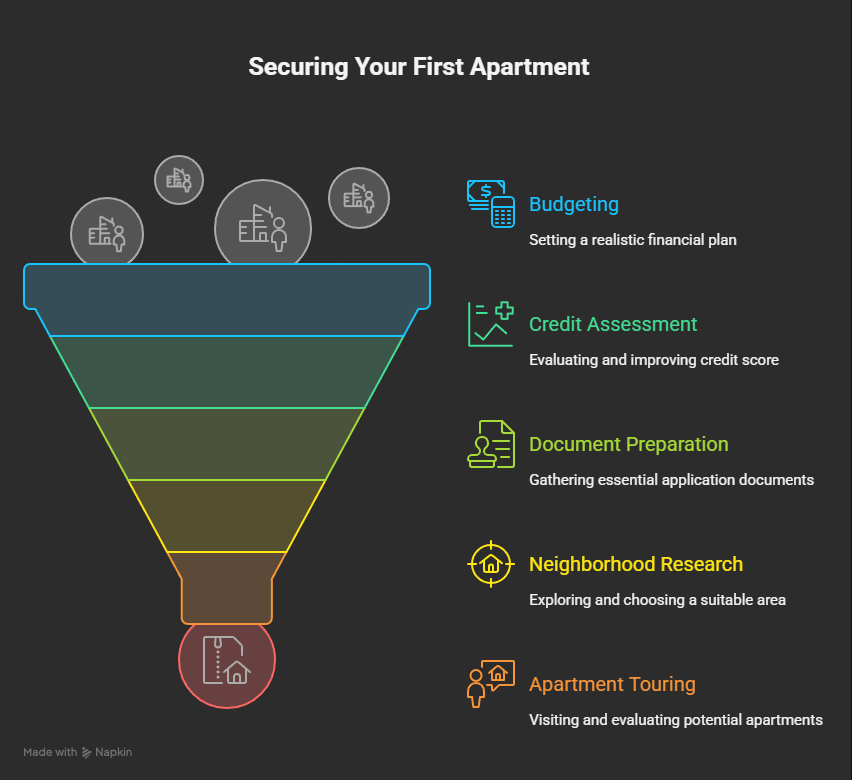
Step 1: Set a Realistic Budget
The U.S. Department of Housing and Urban Development recommends spending no more than 30% of your gross monthly income on rent. For example, if you earn $4,000/month, aim for rent under $1,200.
- Calculate Total Costs: Include utilities (electricity, water, internet), renters insurance ($15–$22/month), parking fees, and move-in costs (security deposit, application fees).
- Use a Rent Calculator: Tools like Apartments.com’s rent affordability calculator help determine your budget.
- Mistake to Avoid: Overestimating affordability. In high-cost cities like New York or San Francisco, sticking to 30% may be tough, so prioritize essential expenses.
Step 2: Assess Your Credit Score
Landlords often check your credit score (FICO or VantageScore, 300–850) to gauge financial reliability. A score of 650+ is ideal, but 580 may suffice with a co-signer.
- Check Your Score: Use free services like Credit Karma or Experian.
- Improve Your Credit: Pay bills on time, reduce credit card balances below 30% utilization, and dispute errors on your credit report via AnnualCreditReport.com.
- No Credit?: Provide a co-signer, larger deposit, or proof of rent payments via tools like AxcessRent.
Step 3: Gather Essential Documents
To streamline your application, prepare these documents in advance:
- Proof of Income: Two months of pay stubs, a job offer letter, or tax returns (if self-employed).
- References: Personal references from employers or professors if you lack rental history.
- Government ID: A valid driver’s license or passport.
- Bank Statements: Show financial stability.
- Renters Insurance Proof: Some landlords require this before move-in.
Having these ready speeds up the process and shows landlords you’re organized.
Step 4: Research Neighborhoods
Location is critical. A great apartment in a bad neighborhood can ruin your experience.
- Safety: Check crime statistics on sites like AreaVibes.com or visit the area day and night.
- Amenities: Look for proximity to work, school, public transport, grocery stores, or gyms.
- Vibe: Quiet areas suit families, while lively neighborhoods fit young professionals.
- Mistake to Avoid: Skipping neighborhood research. A “perfect” apartment in a high-crime or noisy area can lead to regret.
Step 5: Use Multiple Search Platforms
Expand your search beyond one platform to find the best listings:
- National Sites: Apartments.com, Zillow, Rent.com, or Redfin Rentals.
- Local Platforms: Check Facebook groups, neighborhood bulletin boards, or property management sites.
- Drive Around: Some landlords post signs outside units, especially in less competitive markets.
Step 6: Prioritize Needs vs. Wants
Make a list of must-haves (e.g., parking, laundry) versus nice-to-haves (e.g., in-unit washer/dryer, pool).
- Needs: Budget-friendly rent, safe location, commute time.
- Wants: Balcony, gym, modern appliances.
- Tip: Rank priorities to narrow down options without getting distracted by flashy amenities.
Step 7: Tour Apartments In-Person
Never sign a lease without seeing the unit. Photos and virtual tours can hide issues like noise or damage.
- What to Check: Test faucets, outlets, appliances, and door locks. Look for water damage, mold, or pests.
- Ask Questions: Who handles maintenance? Are utilities included? What’s the guest policy?.
- Mistake to Avoid: Relying solely on virtual tours. In-person visits reveal noise levels, odors, or poor maintenance.
Step 8: Understand Lease Terms
A lease is a legally binding contract, so read it carefully before signing.
- Key Terms to Check:
- Rent amount and due date.
- Security deposit (usually one month’s rent) and refund conditions.
- Maintenance responsibilities (e.g., landlord covers repairs, tenant handles minor upkeep).
- Pet policies, subletting rules, and lease termination penalties.
- Mistake to Avoid: Signing without understanding terms. Clarify unclear clauses with the landlord or seek legal advice.
Step 9: Get Renters Insurance
Renters insurance protects your belongings from theft, fire, or water damage and may cover liability or temporary housing. It’s often required by landlords and costs $15–$22/month.
- Why It Helps: Shows landlords you’re responsible and can sway approval in competitive markets.
- How to Get It: Shop quotes from providers like State Farm or Lemonade. Confirm coverage meets lease requirements.
Step 10: Submit a Strong Application
In competitive markets, landlords pick the first qualified applicant. Stand out by:
- Completing Every Field: Incomplete applications are often rejected.
- Acting Fast: Submit applications within 24–48 hours of touring.
- Including a Cover Letter: Explain why you’re a reliable tenant, especially if you lack rental history.
Step 11: Consider a Co-Signer or Guarantor
If you have no credit or low income, a co-signer (e.g., parent or relative) with good credit can guarantee your rent payments.
- Requirements: Co-signers typically need a credit score of 670+ and income 3–4 times the rent.
- Alternative: Offer a larger security deposit or prepay rent to boost landlord confidence.
Step 12: Avoid Rental Scams
Rental scams surged 64% in 2021, per the FBI, and remain a risk in 2025.
- Red Flags: Listings too good to be true, landlords requesting cash/wire transfers, or pressure to pay before seeing the unit.
- How to Protect Yourself:
- Verify listings on trusted platforms like Apartments.com.
- Never pay deposits before signing a lease or touring in-person.
- Use traceable payments (checks, online portals) and request receipts.
Step 13: Negotiate Lease Terms
You can negotiate terms like move-in dates, fees, or maintenance clauses.
- Tips: Ask for a lower application fee, free parking, or minor repairs before move-in.
- When to Negotiate: Winter months (less competitive) or for vacant units landlords want filled.
Step 14: Document the Apartment’s Condition
Before moving in, inspect and document the unit’s condition to protect your security deposit.
- Take Photos/Videos: Note scratches, broken blinds, or worn floors.
- Complete Move-In Checklist: Many landlords provide an inventory form to sign.
- Mistake to Avoid: Skipping the inspection. You could be charged for pre-existing damage.
Step 15: Set Up Utilities
Contact utility providers (electricity, gas, water, internet) at least a week before move-in to avoid delays.
- Ask the Landlord: Confirm which utilities you’re responsible for.
- Mistake to Avoid: Forgetting to activate utilities, which can disrupt your move-in.
Step 16: Plan Your Move-In
Organize your move to minimize stress:
- Gather Supplies: Save on boxes by collecting them from stores or online orders.
- Measure Doorways: Ensure furniture fits through doors, especially in older buildings.
- Book a Moving Truck: Reserve early via U-Haul or Penske for cheaper rates.
Step 17: Purchase Essentials
Stock your apartment with must-haves:
- Cleaning Supplies: For a deep clean before unpacking.
- Kitchenware: Pots, pans, utensils, and dishes.
- Bedding and Toiletries: Ensure comfort from day one.
Step 18: Meet Your Neighbors
Building relationships with neighbors can ease future interactions and provide insights into the community.
- Benefits: Neighbors can watch for packages or share tips about the building.
- How to Start: Introduce yourself during move-in or at community events.
Step 19: Understand Tenant Rights
Tenant rights vary by state but generally include a habitable living environment, privacy, and protection against discrimination.
- Research: Check your state’s tenant handbook or fair housing agency.
- Example: California requires landlords to return security deposits within 21 days, while Ohio allows 30 days.
Step 20: Build Credit with Rent Payments
On-time rent payments can boost your credit score, especially helpful for first-time renters with thin credit files.
- Use Tools: Services like AxcessRent or Experian Boost report rent payments to credit bureaus.
- Impact: Consistent $1,500/month rent payments can improve your payment history, raising your score by 20–50 points in months.
How to Get Approved as a First-Time Renter
Getting approved as a first-time renter can be challenging without rental or credit history. Here’s how to increase your chances:
- Demonstrate Financial Stability:
- Provide pay stubs or a job offer letter showing income 2.5–3 times the rent.
- Submit bank statements to prove savings.
- Boost Your Credit:
- Use AxcessRent to report past rent payments (if applicable).
- Become an authorized user on a trusted person’s credit card.
- Get a Co-Signer or Guarantor:
- A co-signer with a 670+ credit score and strong income can secure your application.
- Offer More Upfront:
- Propose a larger security deposit or prepay 2–3 months’ rent.
- Provide References:
- Use personal references (e.g., employer, professor) to vouch for your reliability.
- Be Professional:
- Respond promptly to landlord inquiries and dress neatly for tours.
- Get Renters Insurance:
- Shows responsibility and protects against liabilities, swaying landlords in your favor.
Example: If applying for a $1,200/month apartment, show a monthly income of $3,600+, a credit score of 600+, and renters insurance to strengthen your application.
Biggest Renter Mistakes to Avoid
Avoid these common pitfalls to ensure a smooth rental experience:
- Not Reading the Lease: Missing clauses on rent increases or maintenance can lead to surprises.
- Skipping Renters Insurance: Leaves you vulnerable to losses from theft or damage.
- Underestimating Costs: Forgetting utilities, move-in fees, or furniture costs strains your budget.
- Ignoring Inspections: Failing to document pre-existing damage risks losing your deposit.
- Falling for Scams: Paying deposits without seeing the unit or verifying the landlord can cost thousands.
- Not Researching the Neighborhood: A bad location can affect safety or quality of life.
- Rushing the Process: Signing a lease under pressure may lead to unfavorable terms.
- Overlooking Maintenance Policies: Unclear repair responsibilities can cause disputes.
Tools and Resources for First-Time Renters
- AxcessRent: Report rent payments to build credit, ideal for first-time renters.
- Experian Boost: Add utility payments to your credit file (free).
- Apartments.com/Zillow: Search for listings and filter by budget or amenities.
- AnnualCreditReport.com: Free credit reports to check for errors.
- National Low Income Housing Coalition: Find affordable housing options.
- Tenant Handbooks: State-specific guides for renter rights.
Conclusion
Renting your first apartment in 2025 is an exciting but complex process. By following this 20-step checklist, you’ll navigate budgeting, applications, and move-in with confidence. To get approved as a first-time renter, focus on financial stability, a strong application, and tools like AxcessRent to build credit. Avoid common mistakes like skipping lease reviews or falling for scams to protect your finances and peace of mind. Start your journey by checking your credit at AnnualCreditReport.com and exploring listings on Apartments.com. For more tips and credit-building tools, visit AxcessRent to make your first rental experience a success.
FAQs for First-Time Renters
How to Get Approved as a First-Time Renter?
To get approved:
- Show income 2.5–3 times the rent with pay stubs or bank statements.
- Improve your credit score (aim for 580–650) or use a co-signer.
- Provide personal references if you lack rental history.
- Offer a larger deposit or prepay rent.
- Submit a complete application with renters insurance proof.
What Are the Biggest Renter Mistakes to Avoid?
Avoid:
- Not reading the lease thoroughly.
- Skipping renters insurance.
- Underestimating total costs (rent, utilities, fees).
- Ignoring apartment inspections.
- Falling for rental scams.
What Documents Do I Need to Rent an Apartment?
You’ll need:
- Proof of income (pay stubs, tax returns).
- Government ID (driver’s license, passport).
- Personal references.
- Bank statements.
- Proof of renters insurance (if required).
What should i know as a first time renter ?
- Use a co-signer with strong credit.
- Prepay rent or offer a larger deposit.
- Report rent payments via AxcessRent to build credit.
- Provide strong personal references.
When Is the Best Time to Rent an Apartment?
Winter months (November–February) are less competitive, with lower rent prices and more landlord flexibility, especially in colder climates or student-heavy areas.
Do I Need Renters Insurance?
While not legally required, many landlords mandate it. It’s affordable ($15–$22/month) and protects against theft, fire, or liability. It also boosts your approval odds.